What You Are Seeing
Most calls start the same way: you press the remote and nothing happens, or the motor hums but the door doesn't move. Sometimes the opener runs the full cycle and the door reverses halfway up for no reason you can see.
Blink codes and slack
Sometimes the wall button works but the remote doesn't, or the light blinks a set number of times before the unit shuts itself down. These aren't random. A chain or belt that slaps instead of pulling tight usually means the sprocket or gear inside the head unit has stripped.
Reversal and remote faults
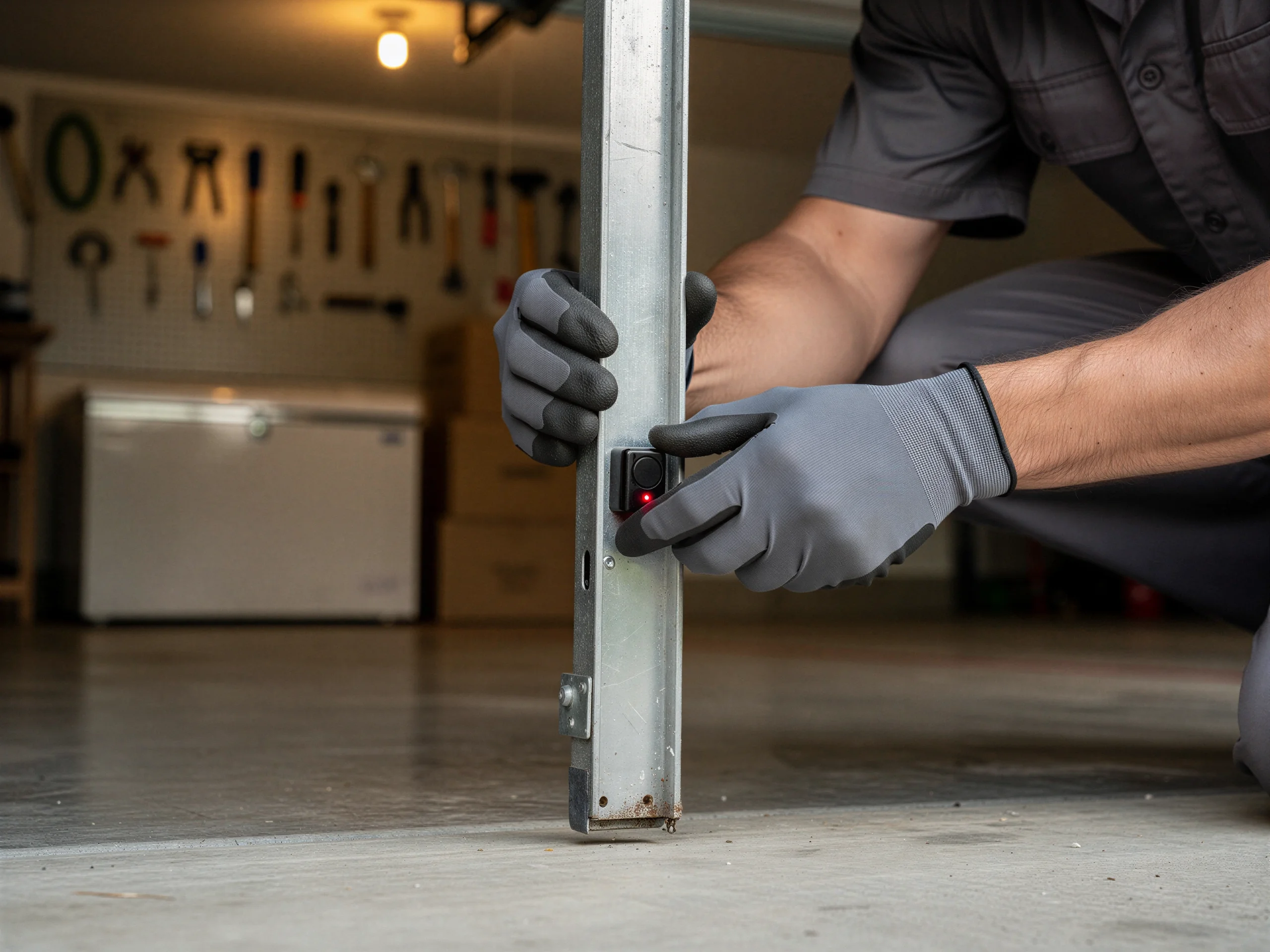
A door that reverses on its own is almost always a safety sensor out of alignment or a travel limit that's drifted. A dead remote with a working wall button points at the receiver board, not the motor. Across the households we serve, a good share of garage door openers are the original unit that came with the house or a direct replacement from the 1990s or early 2000s.
Older opener generations
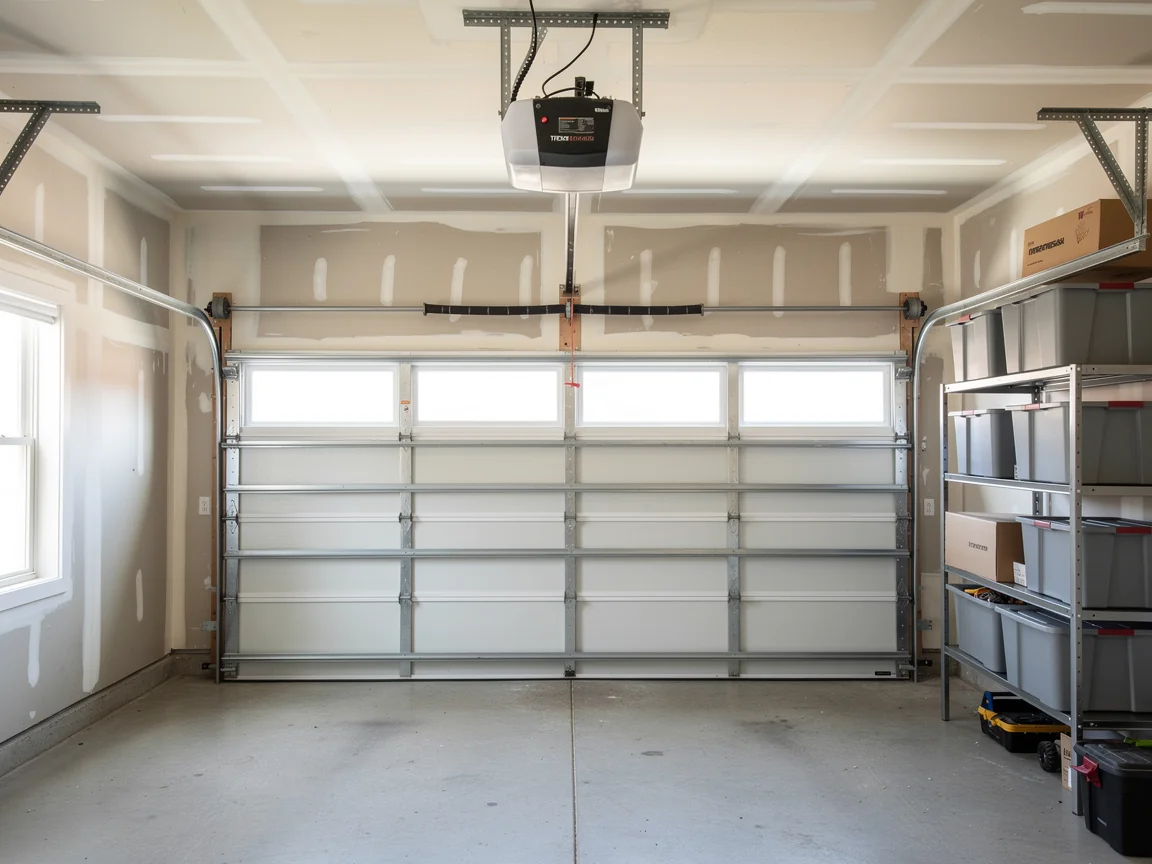
Those units use parts that newer openers don't - different gear pitch, different circuit board pinouts, sometimes a capacitor-start motor instead of the permanent-magnet motors common today. Knowing which generation of opener you've got changes which fix applies before a truck even leaves for the job.
How We Fix It
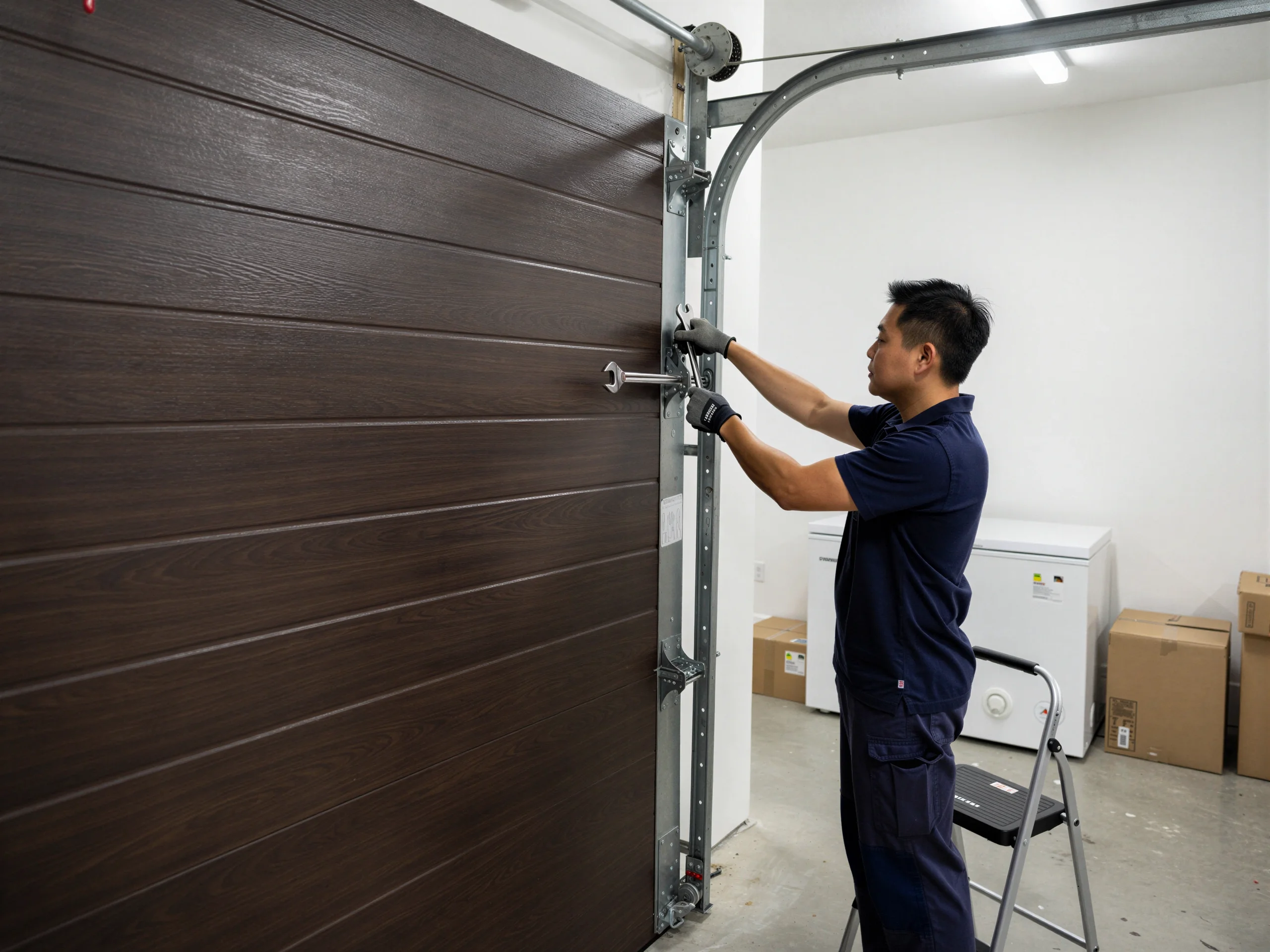
We start by running the opener through its cycle and watching where it fails - at the motor, at the drive gear, at the sensors, or at the logic board.
Four specific fault spots
Most of the time the fault isolates to one of those four spots, and the repair is specific: a new drive gear and sprocket kit if the plastic has stripped, a realigned or replaced photo-eye sensor if the door reverses without contact, a reset or reprogram of the travel limits if the door stops short or over-travels, or a circuit board swap if the unit won't respond to any input at all.
Discontinued logic boards
Here's the honest limitation: on openers from the 1990s and earlier, logic boards for that exact model aren't always in current production. When we can get the board, we replace it and the opener runs like new for a fraction of the cost of a full unit.
Head unit upgrade option
When we can't, we tell you that up front and give you the option to upgrade the head unit while keeping the existing track, springs, and door panels - no reason to replace parts that are still sound.
Diagnose before quoting
We don't push a new opener on a unit that just needs a $40 gear kit, and we don't spend an hour chasing a board that's clearly dead. The diagnosis tells us which one it is before we quote the job.
What Causes It Around Here
Housing across this service area was mostly built between 1970 and 2004, with the median build year landing around 1988, and that stretch of construction shows up directly in opener failures. A lot of these houses got their openers installed once, in the 80s or 90s, and never swapped them - so the gear kits, capacitors, and circuit boards inside are thirty-plus years old and wearing out on schedule, not from abuse.
The climate here sits in a cold-moderate band, which matters more for openers than most people expect. Chain-drive units lubricated decades ago thicken up in cold mornings, which strains the motor and strips the drive gear faster. Circuit boards that have survived years of summer humidity in an unconditioned garage are also the ones most likely to fail on the first hard cold snap of the season, when condensation inside the housing finally shorts a trace that's been degrading for years.
Across the roughly 6,900 owner-occupied houses we see calls from in this area, this pattern repeats: original-era opener, original-era gear kit, first real cold stretch of the year, and the unit quits. It's predictable enough that we stock the gear kits and sensor parts that fit that generation of opener.
How Long It Takes
Gear, sprocket, sensor, and limit-switch jobs are same-day work - we diagnose and fix in one visit because those parts are on the truck. A full circuit board swap is usually same-day too if the board is one we stock for common opener brands and ages.
Where it slows down is a board for an older or less common unit that has to be ordered - that can run a few days depending on the supplier, and we'll tell you that number specifically when we see the model, not a guess over the phone. If a board isn't available at all, we'll quote the head-unit replacement instead of leaving you waiting on a part that may never ship.
For the median household in this area, with income around $76,000, we try to make sure the first visit gives you a real answer either way: fixed today, fixed in a few days with a part on order, or replaced because the part doesn't exist anymore. No open-ended "we'll see."
Talk to a local pro
Garage door service in Dallas?
Same-day service with honest, upfront quotes.