What You Are Seeing
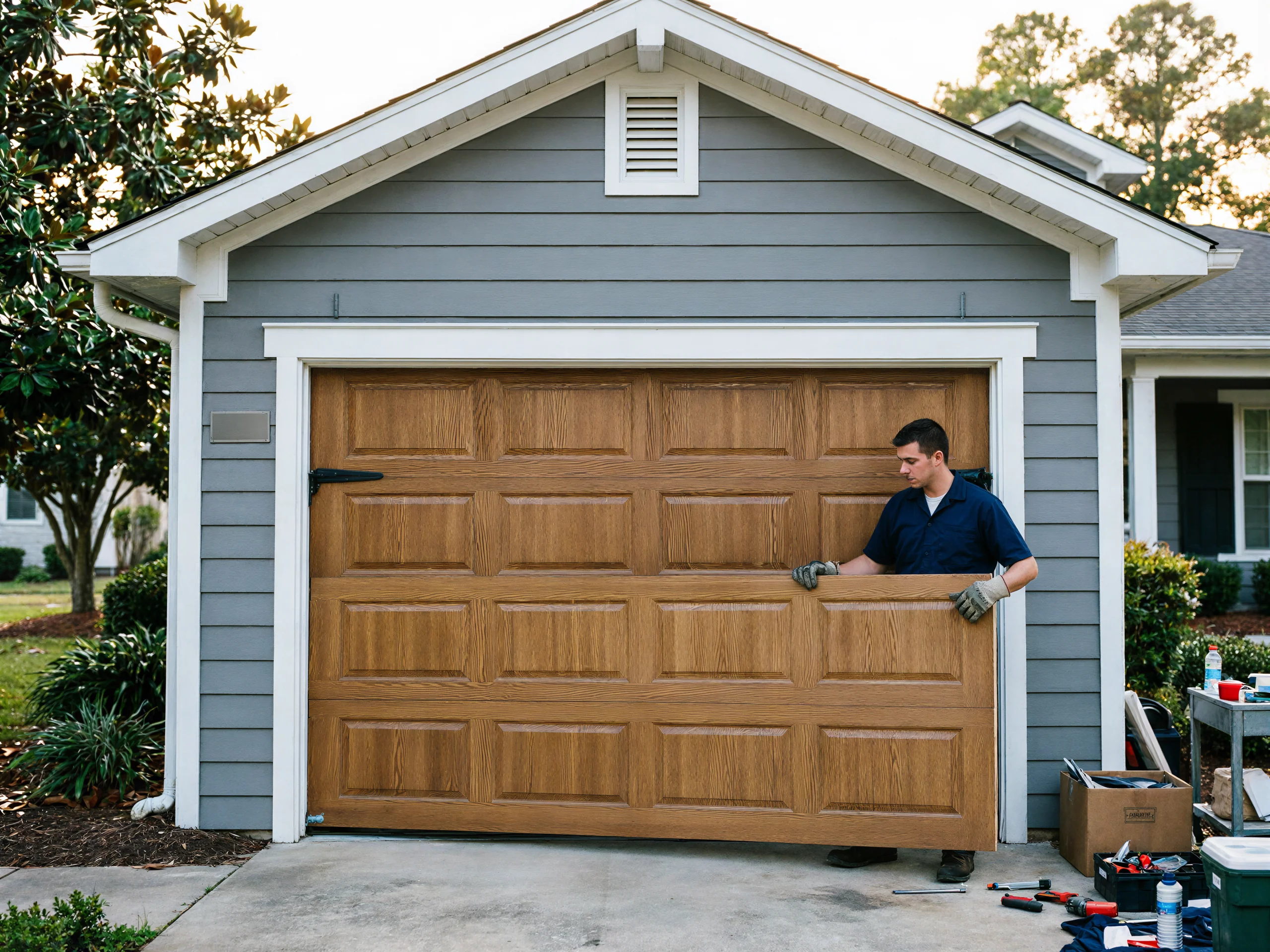
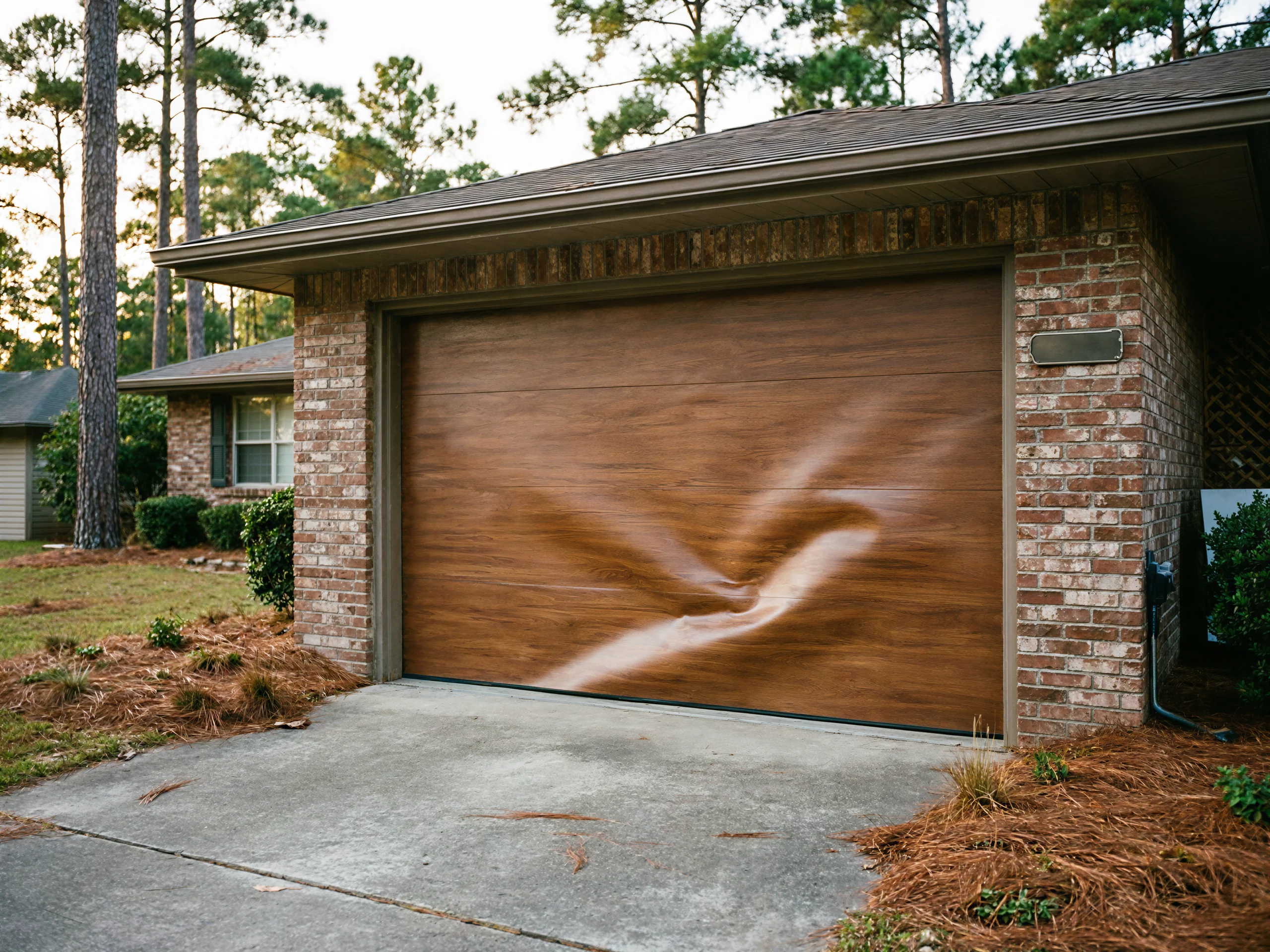
A dented bottom panel is the one most people notice first - usually from a backed-into trailer hitch or a kid's bike - but around here we see just as many cracked panels that nobody hit at all.
Thin-gauge steel aging
Most of the garage doors across this service area went up between 1970 and 2004, with the heaviest run in the 1980s and 90s, which means a lot of thin-gauge steel sections that are now thirty-plus years old.
Seam flex and sagging foam
On those doors the panel seams flex every time the temperature swings, and eventually the seam cracks or the foam core behind it starts to sag and pull away from the skin. You'll also see rust blooming along the bottom edge of a panel, usually starting at a ding where the paint chipped first.
Sections, not whole door
None of that means the whole door is junk. It usually means one or two sections need to come off and get replaced while the track, springs, and opener keep doing their job.
How We Fix It
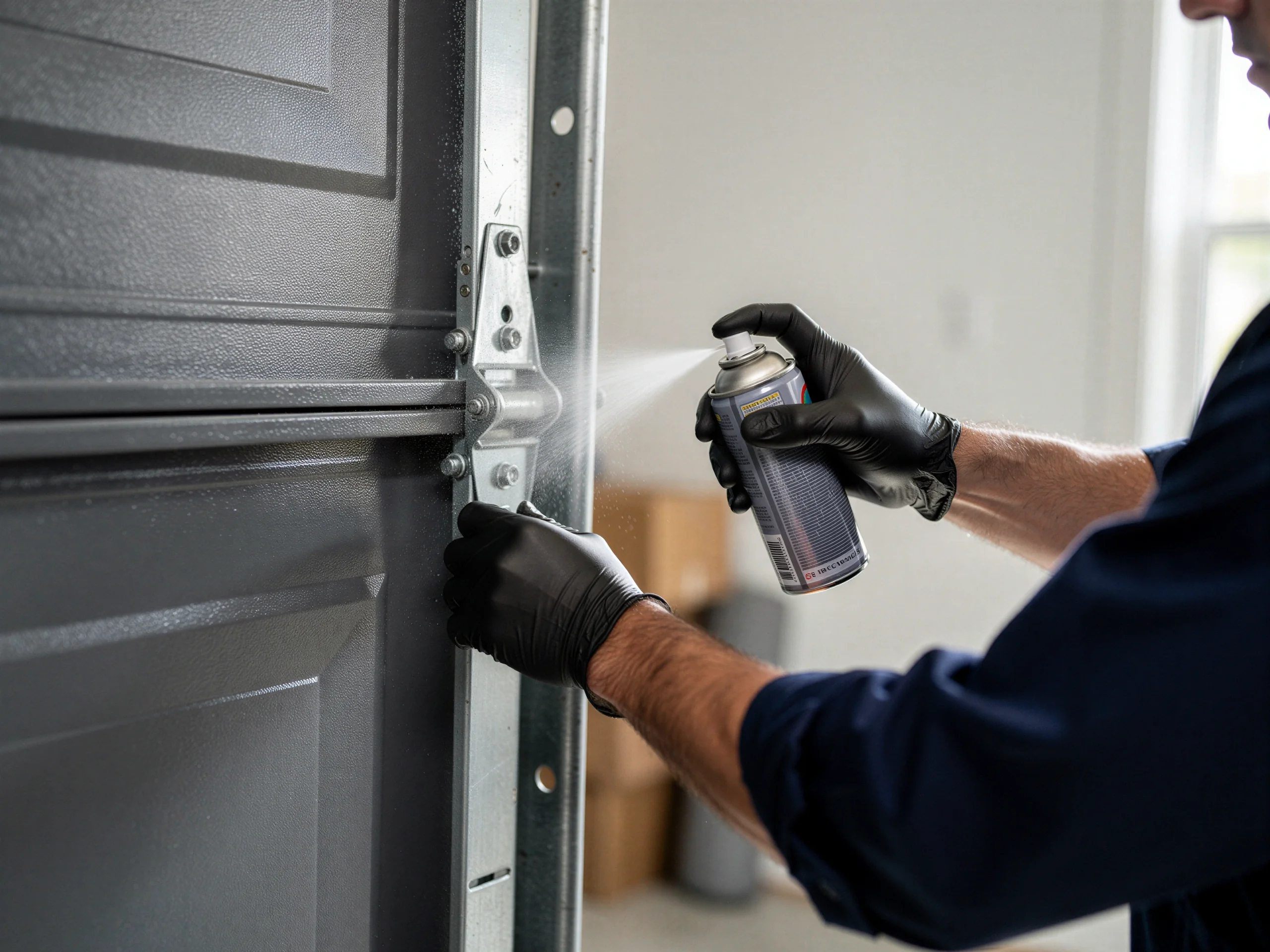
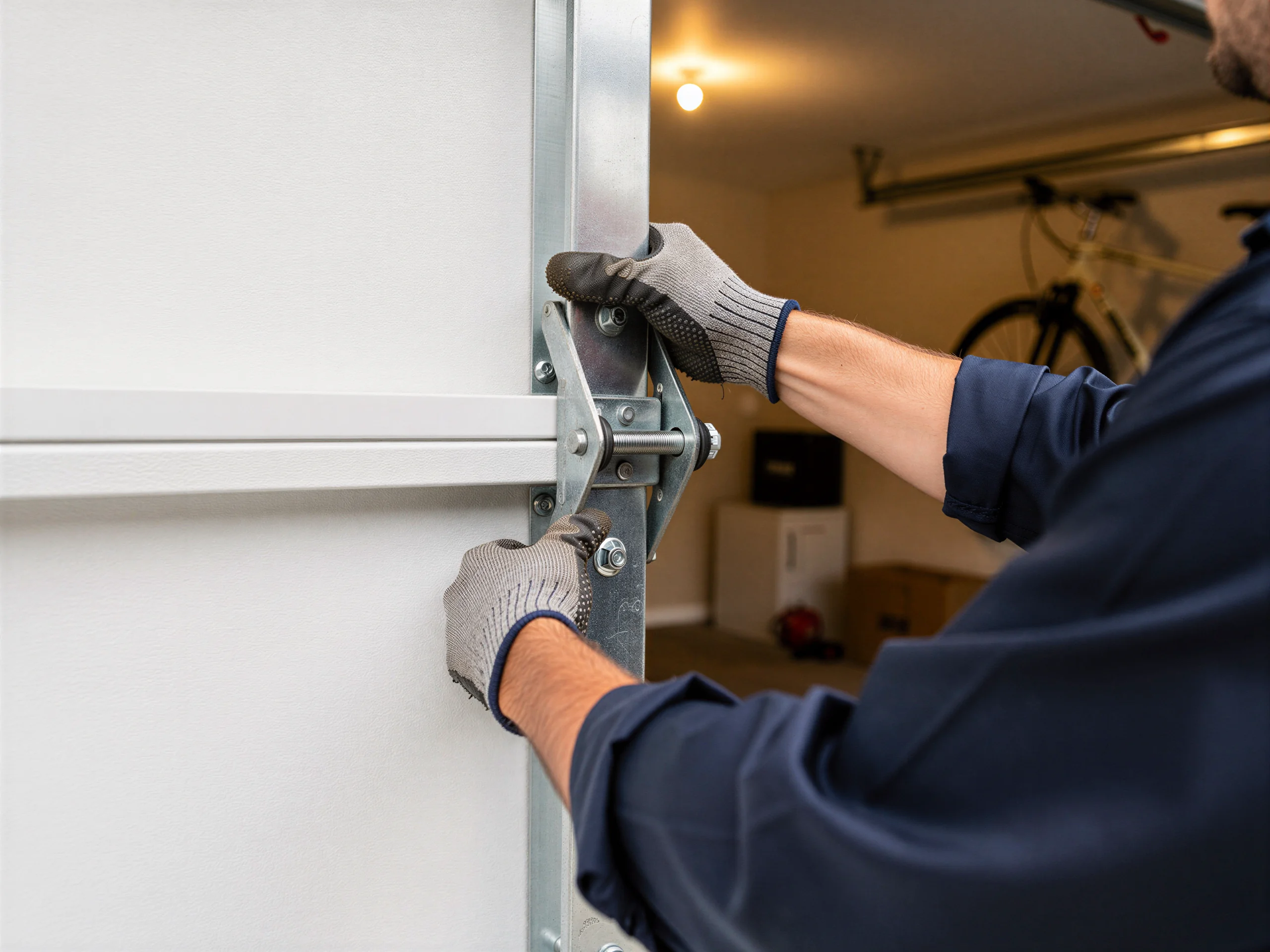
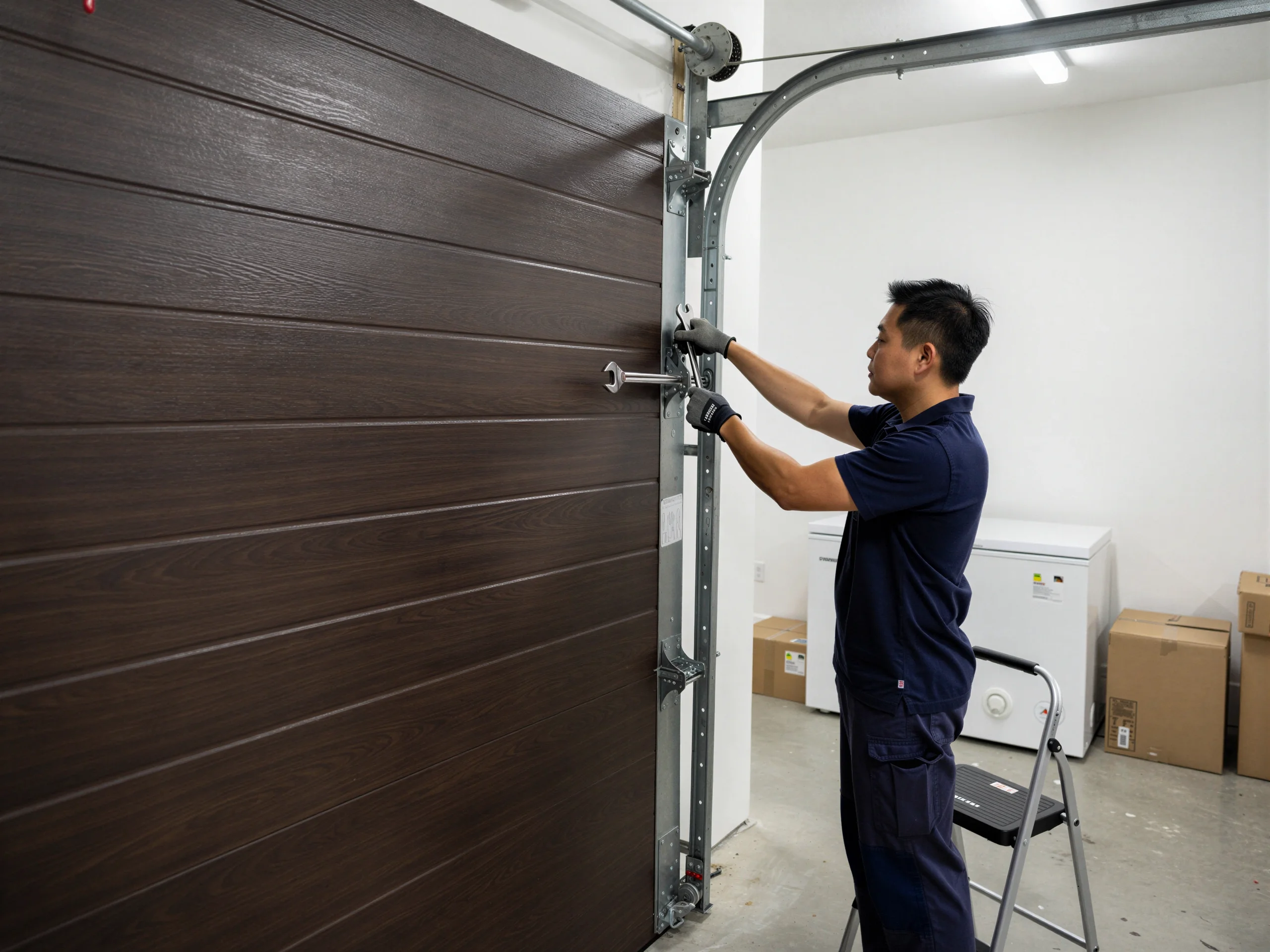
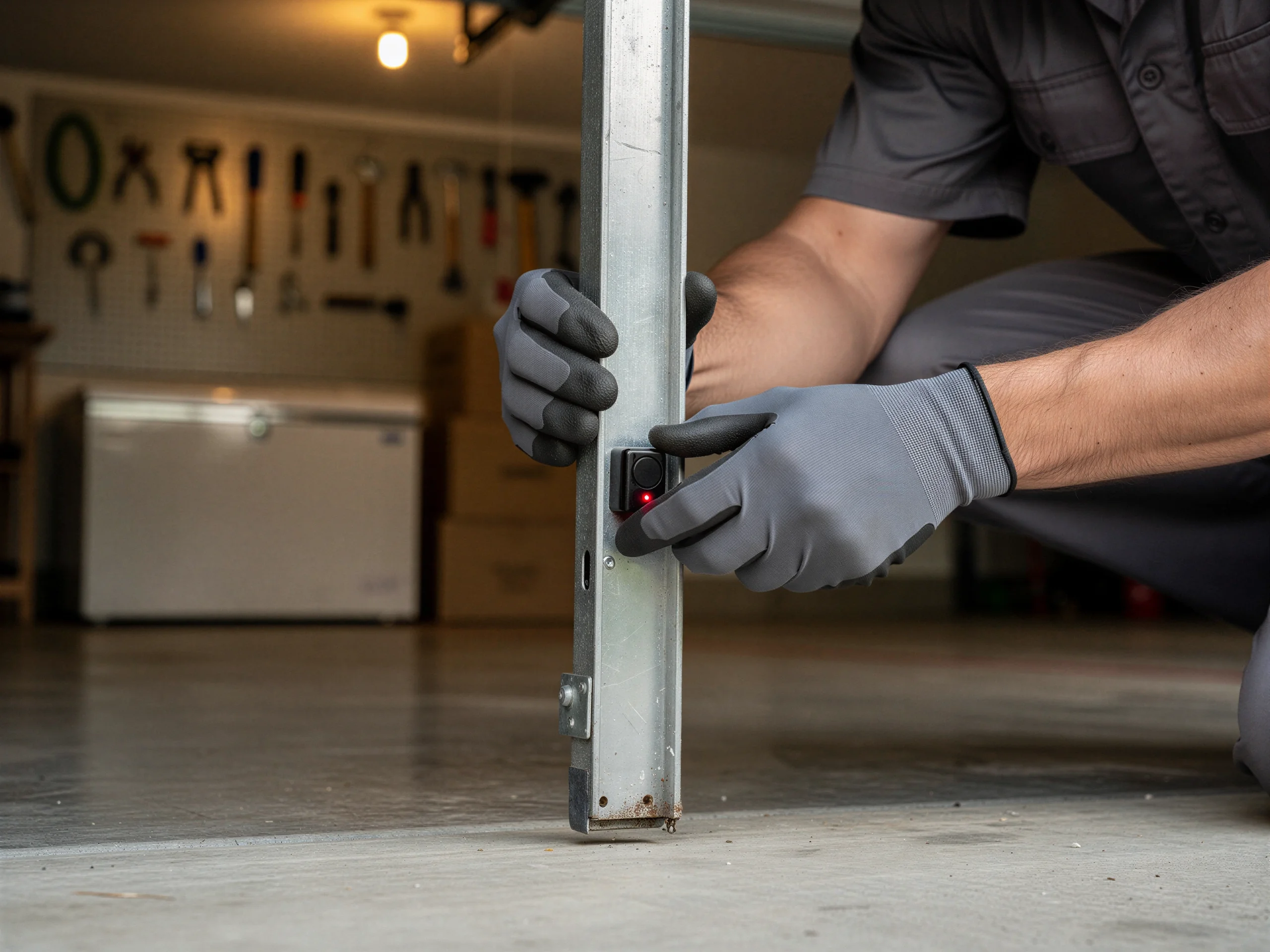
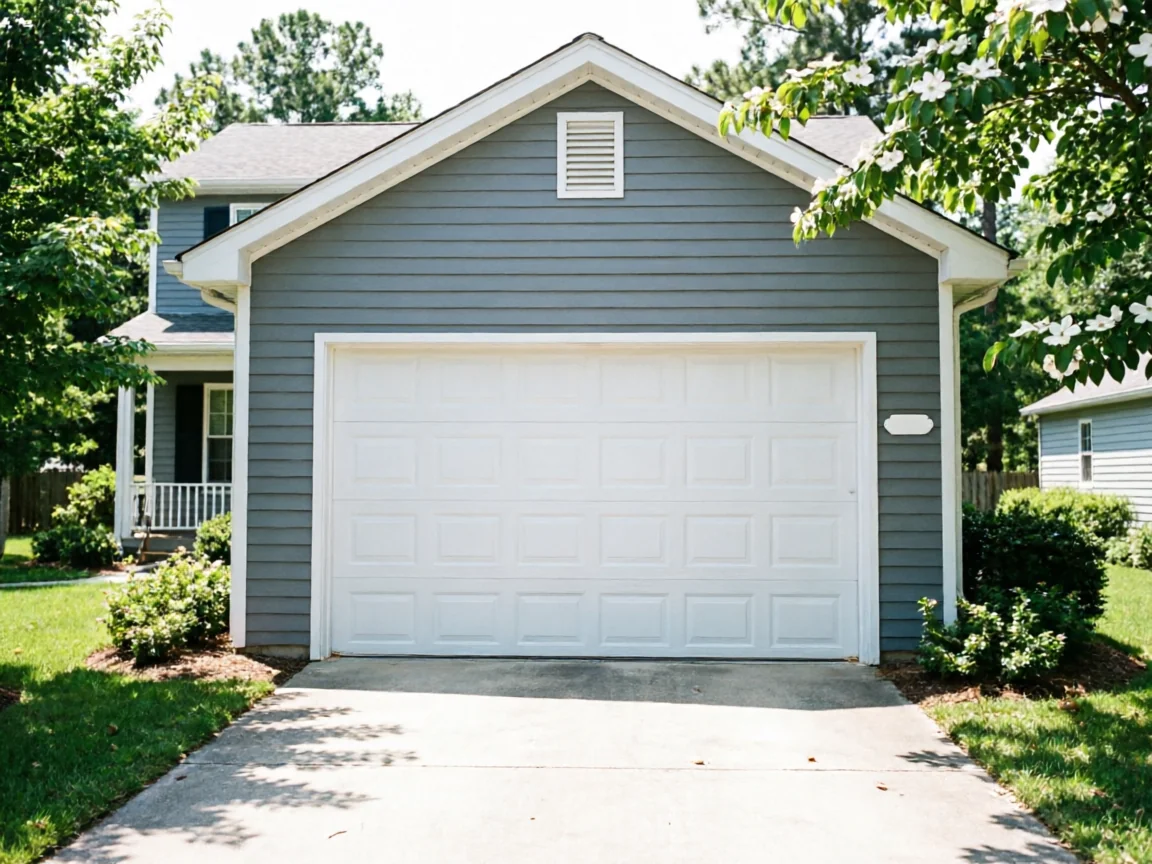
We pull the damaged section, match it against what's still available for that door's make and width, and swap it without touching the rest of the door if the hardware underneath is sound.
Panel availability varies
Doors from the 1980s and 90s era that's common across this area are a mixed bag - some lines are still in production and panels ship in days, others were discontinued years ago and we have to source a close match or rebuild the section from stock parts.
Woodgrain color matching
Here's the honest part: we can't always get an exact color or texture match on an older door, especially woodgrain finishes that have faded in the sun for three decades.
Full door comparison
When a match isn't realistic, we'll tell you straight and lay out whether a full door replacement makes more financial sense than a panel that'll stand out. We don't try to force a mismatched panel onto a door and call it done.
What Causes It Around Here
This area sits in a cold-moderate climate band, which means real freeze-thaw cycles rather than steady cold or steady heat. Steel panels contract hard in a cold snap and expand again a few days later, and that repeated movement is what opens up a seam crack on an older panel before anything hits it. Combine that with housing stock that's mostly 1980s and 90s construction across the seven communities in this service area, and you've got a lot of doors reaching the age where the foam insulation between the steel skins has started breaking down on its own, which makes the panel more brittle and more likely to crack instead of just dent. Of the roughly 13,867 households across the area, about 6,909 are owner-occupied houses with an attached garage - that's the housing type where this failure mode shows up over and over, because the door's been through thirty winters without ever being swapped out.
How Long It Takes
A single panel swap on a door with stock parts still available is usually a one-visit job - we bring the section, pull the old one, and you've got a working door again within the hour.
Sourcing delays panel jobs
Where it slows down is sourcing: if your door's line was discontinued, getting a matched panel can mean a few extra days before we're back out to install it. Full-door replacement, when a panel match genuinely isn't worth chasing, runs longer because the order is custom to your opening width and track setup.
Routing across service towns
We run jobs across the whole service area - from Hiram six miles out to Austell and Rockmart at thirteen, and Emerson, Euharlee, Temple, and Fair Oaks between sixteen and seventeen - so scheduling depends some on where you're routed in that loop.
Match before replacing
With median household income here at $76,424, most owners we see ask us to match the existing panel first and only move to a full door if that search comes up empty.
Talk to a local pro
Garage door service in Dallas?
Same-day service with honest, upfront quotes.