Booking a Visit
We run this call out of Dallas, about 13 miles from Rockmart, so there's no local branch to swing by and no walk-in counter. What that means in practice: you call, we figure out what opener you've got and what it's doing wrong, and we put you on the schedule for a truck coming your way.
Grouping longer runs
Rockmart sits further out than some of the towns we cover - Hiram is only 6 miles from Dallas, for comparison - so we tend to group Rockmart calls with other longer runs like Austell or Rockmart's own neighbors in that 13-to-17-mile band.
No same-hour expectation
That's not a complaint, it's just how the territory is laid out, and it's worth knowing before you call so you're not expecting a same-hour fix. Have the opener's brand and the approximate age of the house handy when you call.
Lead time helps scheduling
With roughly 1,939 households in Rockmart, we're not running a daily loop through town the way we might in a denser part of the service area, so a little lead time on scheduling helps both of us.
Where This Job Goes Sideways
A lot of what we see in Rockmart traces back to how old the house actually is. The median year built here runs around 1975, noticeably older than the 1988 median across the wider service area we cover.
Garage parts outlast openers
That gap matters: openers don't last fifty years, but the garage itself - the header, the mounting bracket, sometimes the track - is still whatever went in with the original build. So you get mismatches.
Old wiring under new openers
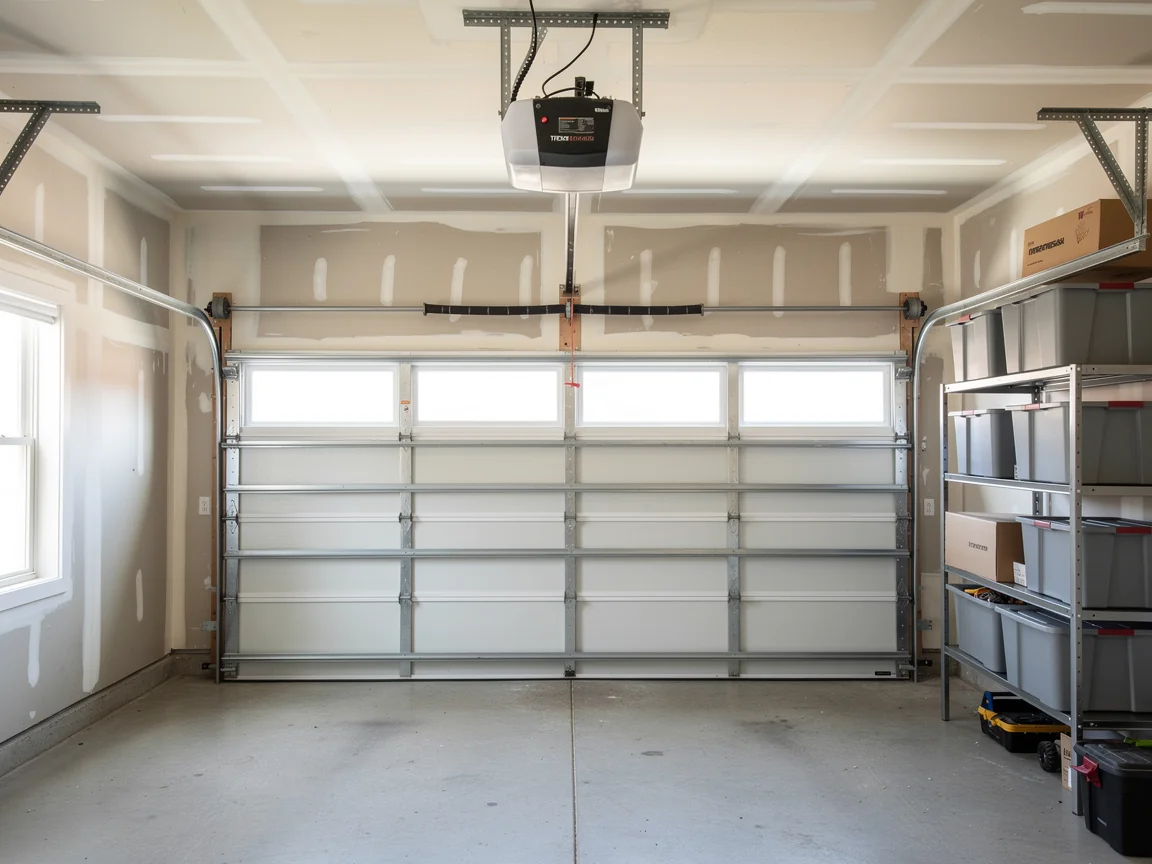
A newer chain-drive or belt-drive opener bolted onto an old wood header that's shifted over the decades. Wiring that was fine for a single bare bulb and a doorbell button, now asked to carry a modern logic board and safety sensors that weren't part of the original design.
Late-onset reversal failure
The failure that catches people off guard is the opener that runs fine for years on a replacement motor, then suddenly won't reverse or won't respond to the remote - not because the new unit is bad, but because it's fighting hardware that predates it by decades. We check the mounting and the header condition before we touch the opener itself, because replacing a motor onto a bad base just buys you the same call again in a year.
The DIY Question
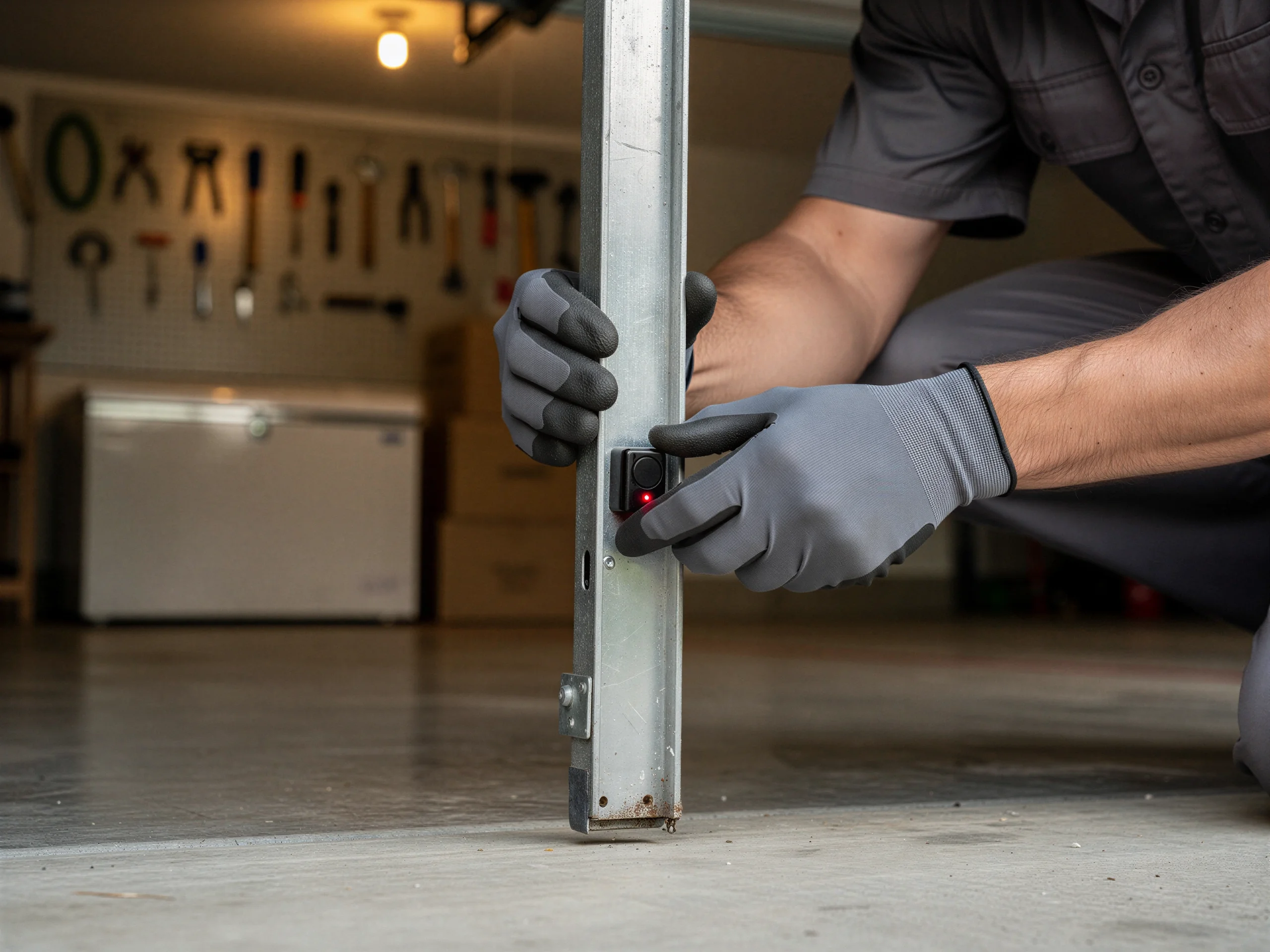
Some of this you can handle yourself. Swapping a remote battery, reprogramming a keypad code, cleaning the photo-eye sensors if they're dirty or knocked out of alignment - that's reasonable weekend work, and we'd rather you try it first than pay a truck to drive 13 miles for a dead 9-volt battery.
Mounting to old headers
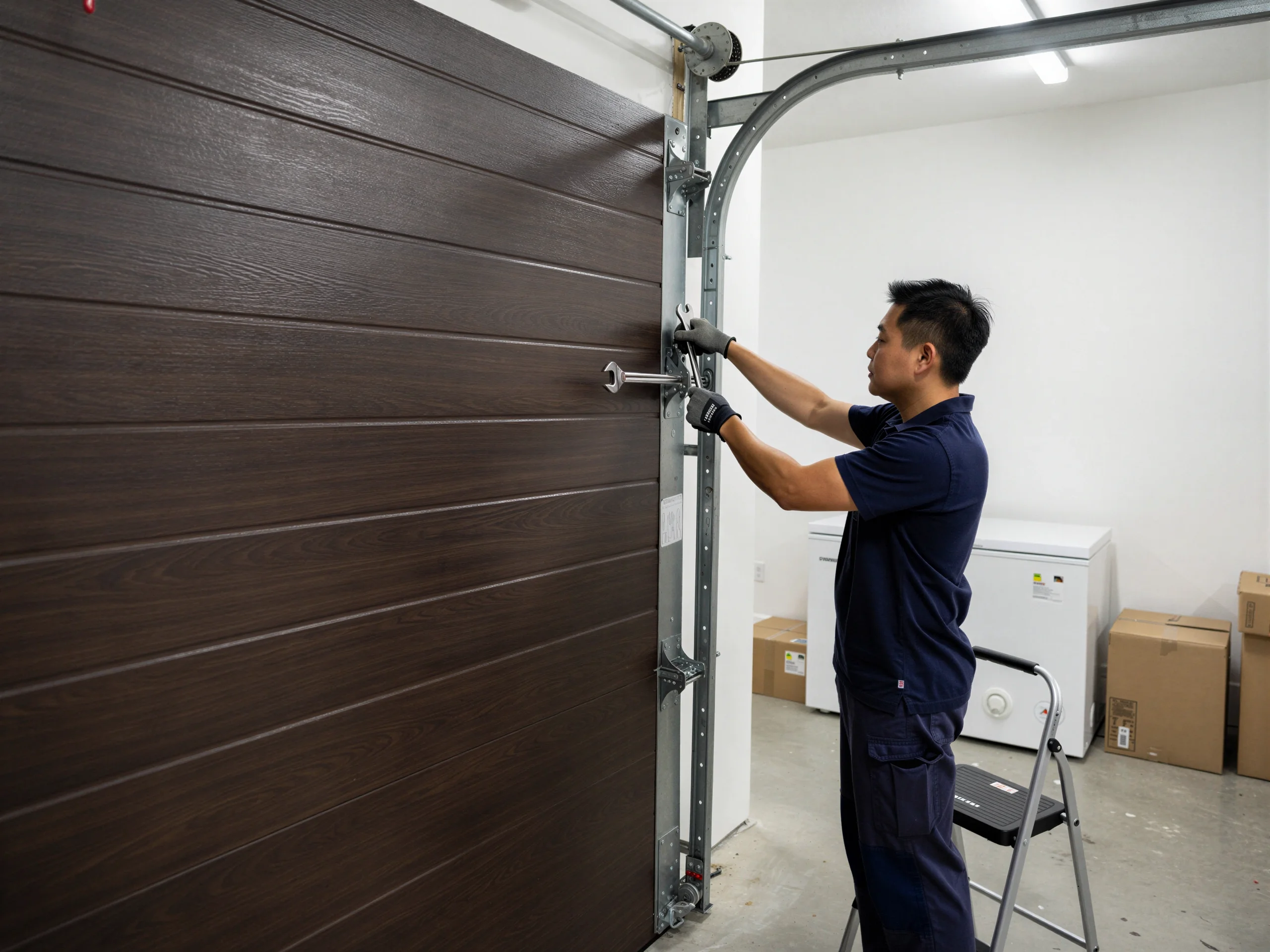
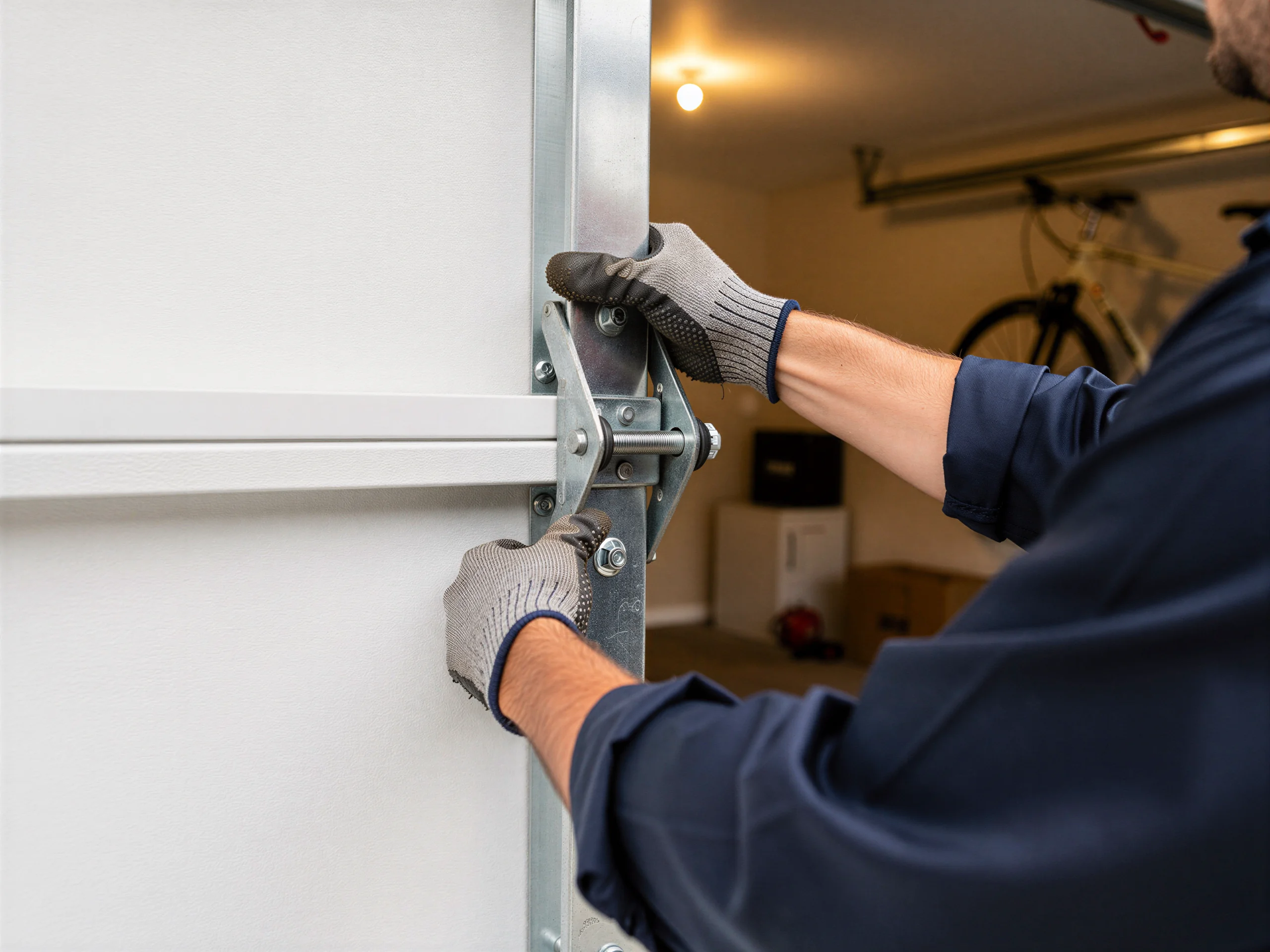
Where we'd stop you: anything involving the opener's mounting to an older header, especially in a house from the 1970s where that wood may have moved or softened over the years.
Alignment, not part swap
If the opener runs but the door doesn't track straight, or the unit strains and reverses on its own, that's not a part-swap job - that's a structural or alignment problem that a new logic board won't fix. Our honest limit here: we don't carry every obsolete chain-drive gear kit on the truck.
Special-order opener parts
Some older opener models from this era have parts that take a special order, and if the lead time on a part is longer than the cost of just replacing the unit, we'll tell you that rather than stringing out a repair.
What Causes It Around Here
Cold snaps do real damage to openers that are already marginal. In this climate band, winter cold tightens chains, stiffens old grease in the gearbox, and makes a worn capacitor finally give out on the one morning you need the door open. That failure pattern shows up more in Rockmart than it might elsewhere in the service area, simply because more of the housing stock here is old enough that the opener's internal grease and gears were never serviced or replaced. The other driver is retrofit mismatch, mentioned above: a 1975-era garage built for a much simpler door system now running a modern opener with safety reversal sensors and a keypad, wired into a circuit that was never meant to carry it. We also see openers that were installed correctly decades ago but never had their travel limits or force settings adjusted as the door's springs aged and the door got harder to lift - the opener just works harder and harder until the motor or the gear finally gives out.
What It Costs
We don't have a flat number to hand you here, and we're not going to make one up. What we can tell you is how the decision usually breaks down.
Lower-income repair calls
With Rockmart's median household income at $53,854 - notably lower than the roughly $76,424 median across the broader service area - the repair-versus-replace call matters more here than it might in wealthier pockets of the territory.
Header condition decides
A repair that keeps an older opener running another few years is often the right call when the house still has its original, solid mounting hardware. A full replacement makes more sense when the header's been patched, the chain-drive gears are the obsolete kind nobody stocks, or the unit's already had one motor swap and is asking for a second.
Quote opener and mounting
We'll look at the opener and the mounting together before quoting anything, because quoting the opener alone without checking what it's bolted to is how people end up paying twice.
Talk to a local pro
Garage door service in Dallas?
Same-day service with honest, upfront quotes.