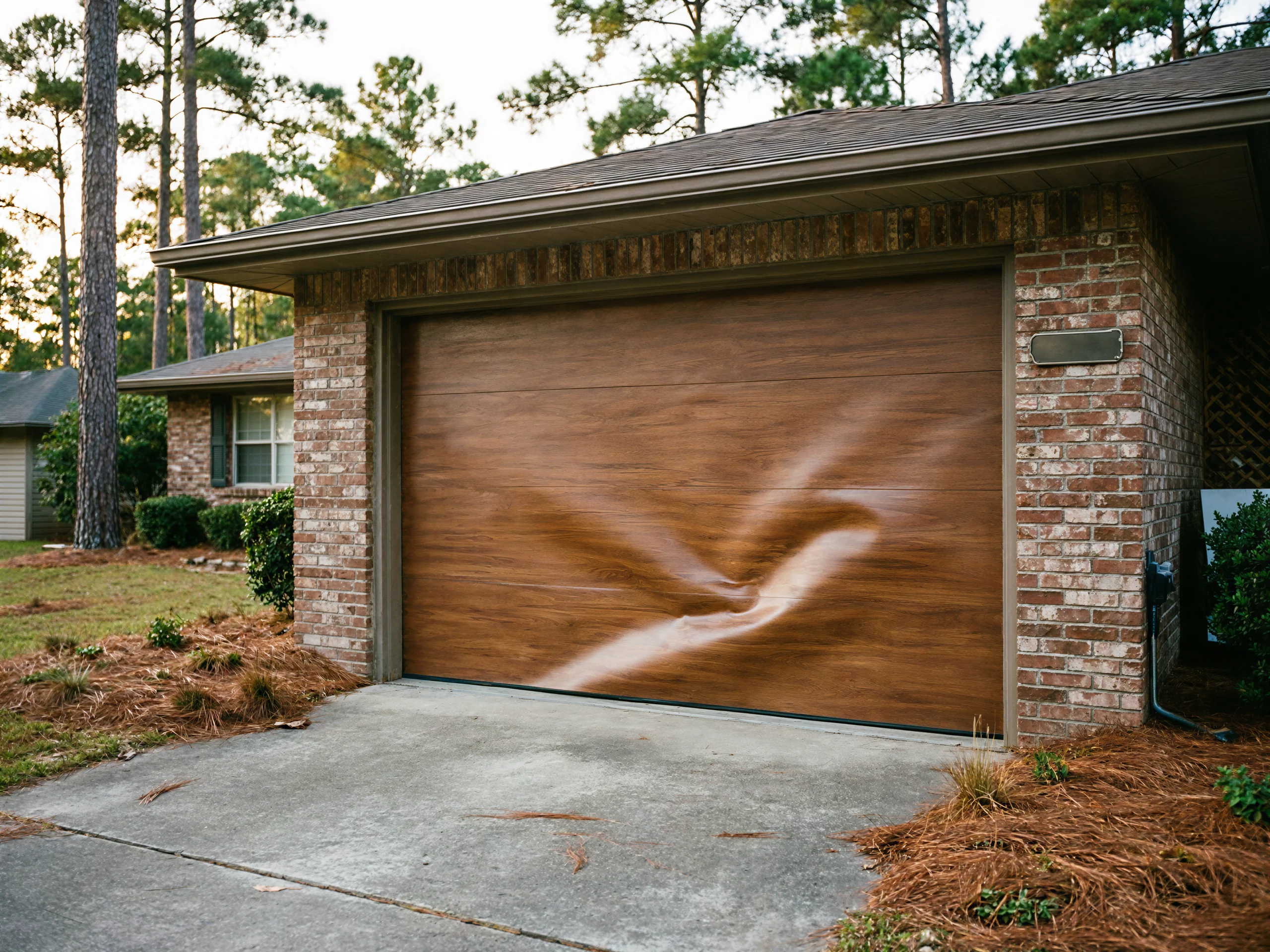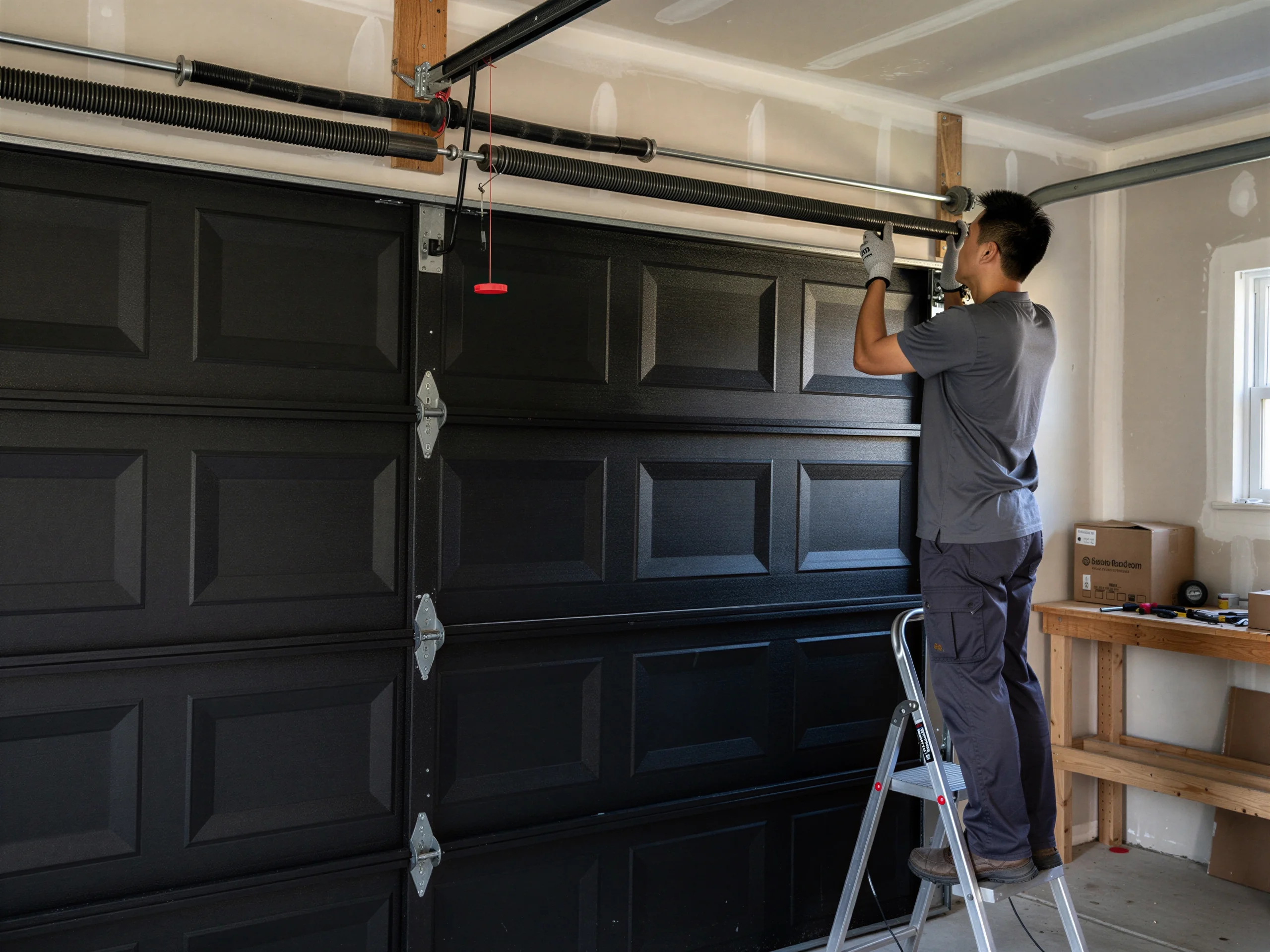
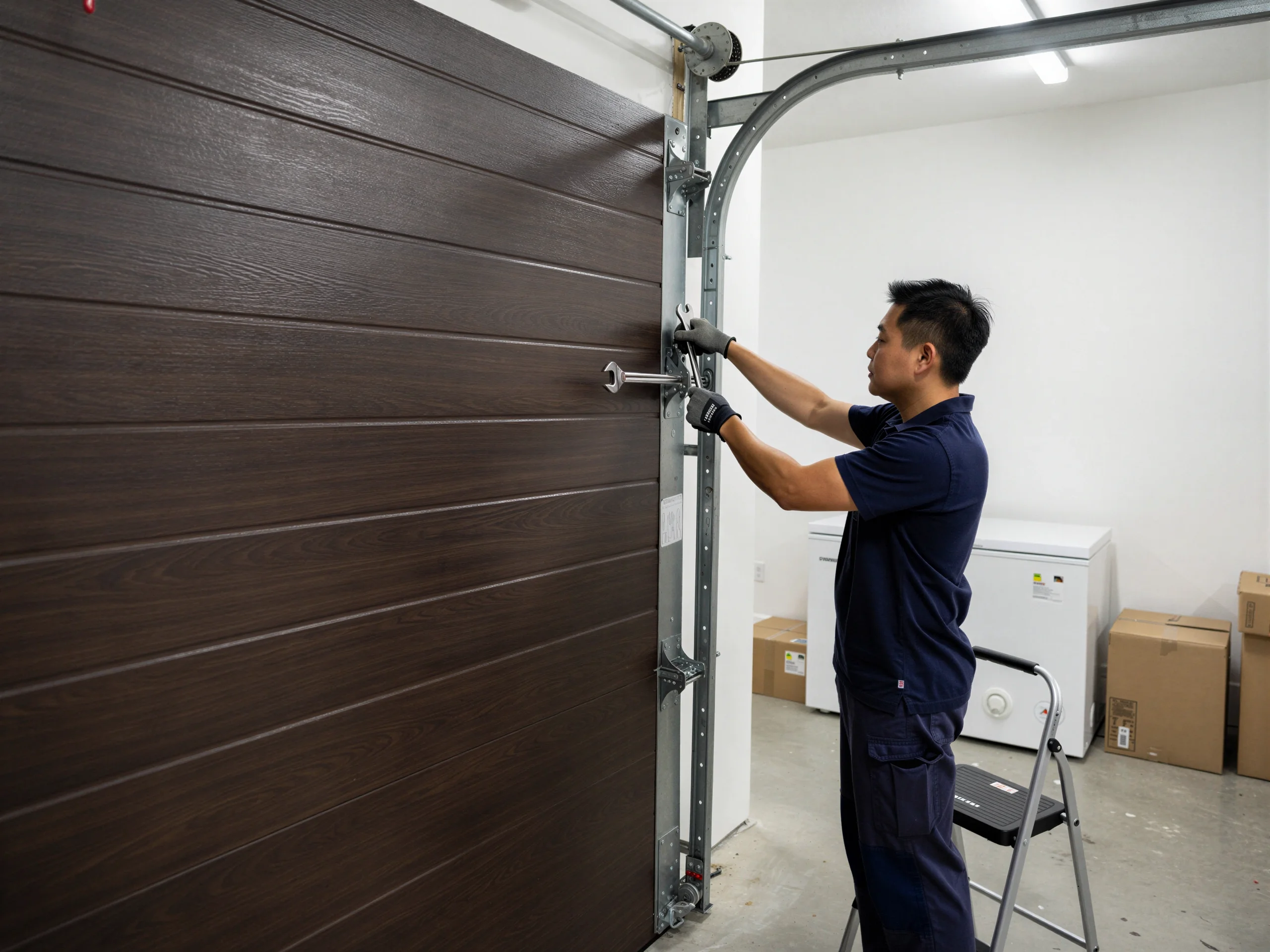
What You Are Seeing
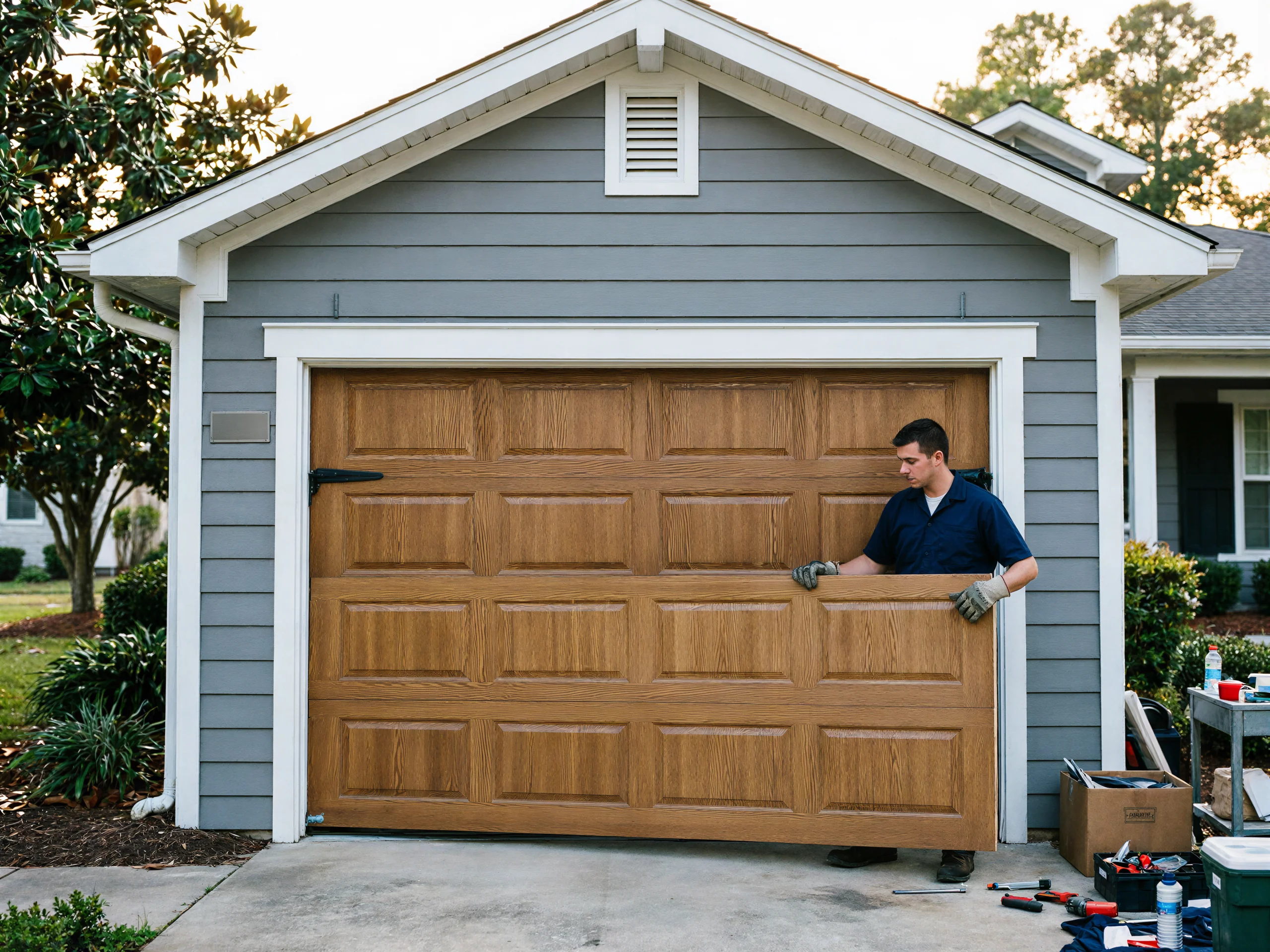
Most of the calls we get out of Emerson start the same way: a spring lets go, or an opener that's been grinding for months finally quits.
Mid-1980s originals
That's not random. The median home here was built around 1984, and a lot of the doors and openers on this side of town are the originals - or the first replacement, installed sometime in the 90s. Torsion springs are rated for a set number of open-close cycles, usually somewhere around 10,000.
Rust in cold-moderate swings
A door that age has been through that many cycles twice over. The climate here doesn't help. We're in a cold-moderate band, which means enough freeze-thaw and humidity swing through the year to work rust into galvanized track and spring coils, even without the hard winters you'd see further north.
Seized center bearing
On a 1984-built door, that shows up as a center bearing that's seized, a drum that's pitted, or a spring with visible corrosion along the coil. None of that is a judgment on how the house was kept up - it's just what thirty-plus years does to steel hardware in this part of Georgia.
The DIY Question
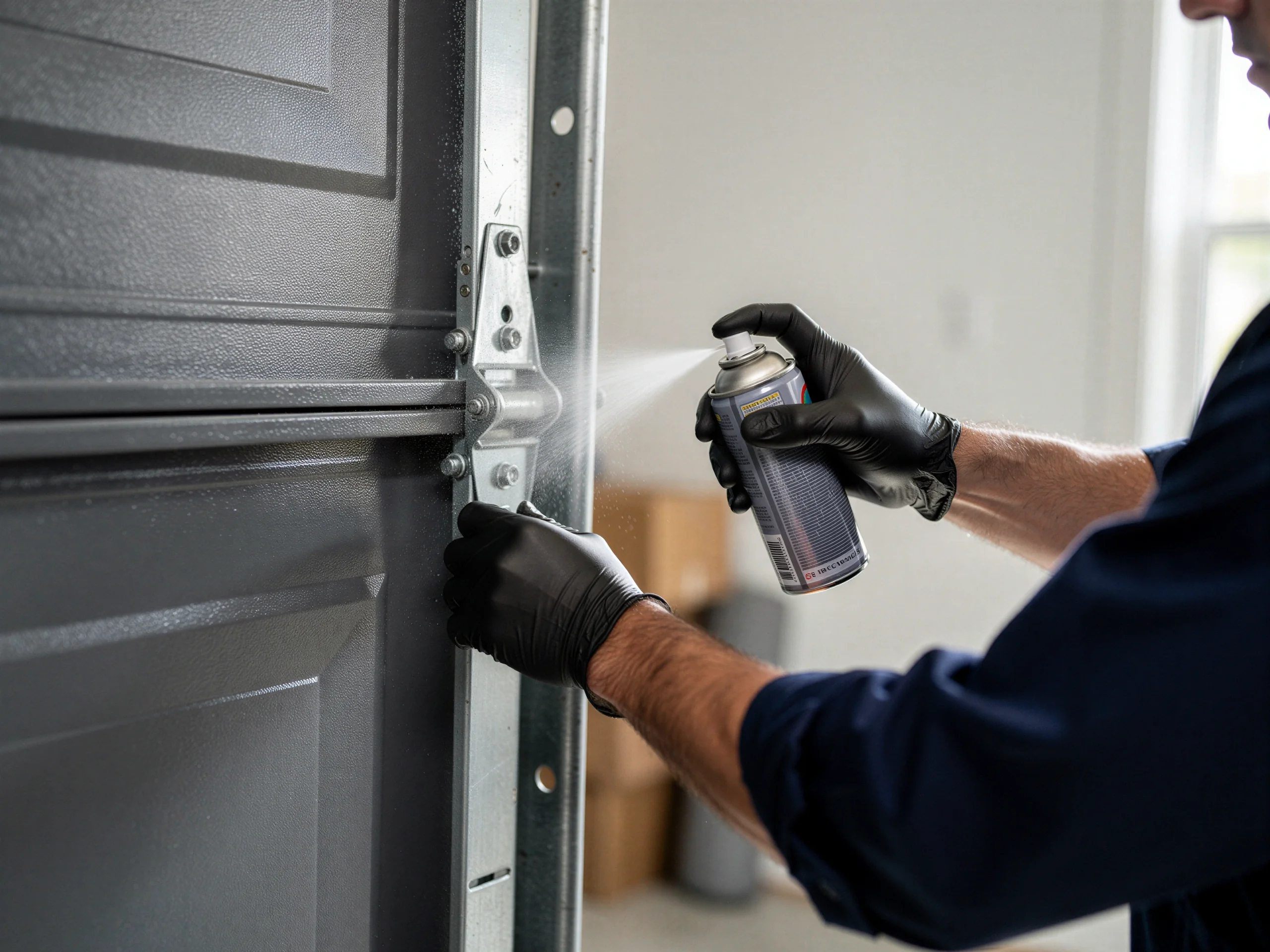
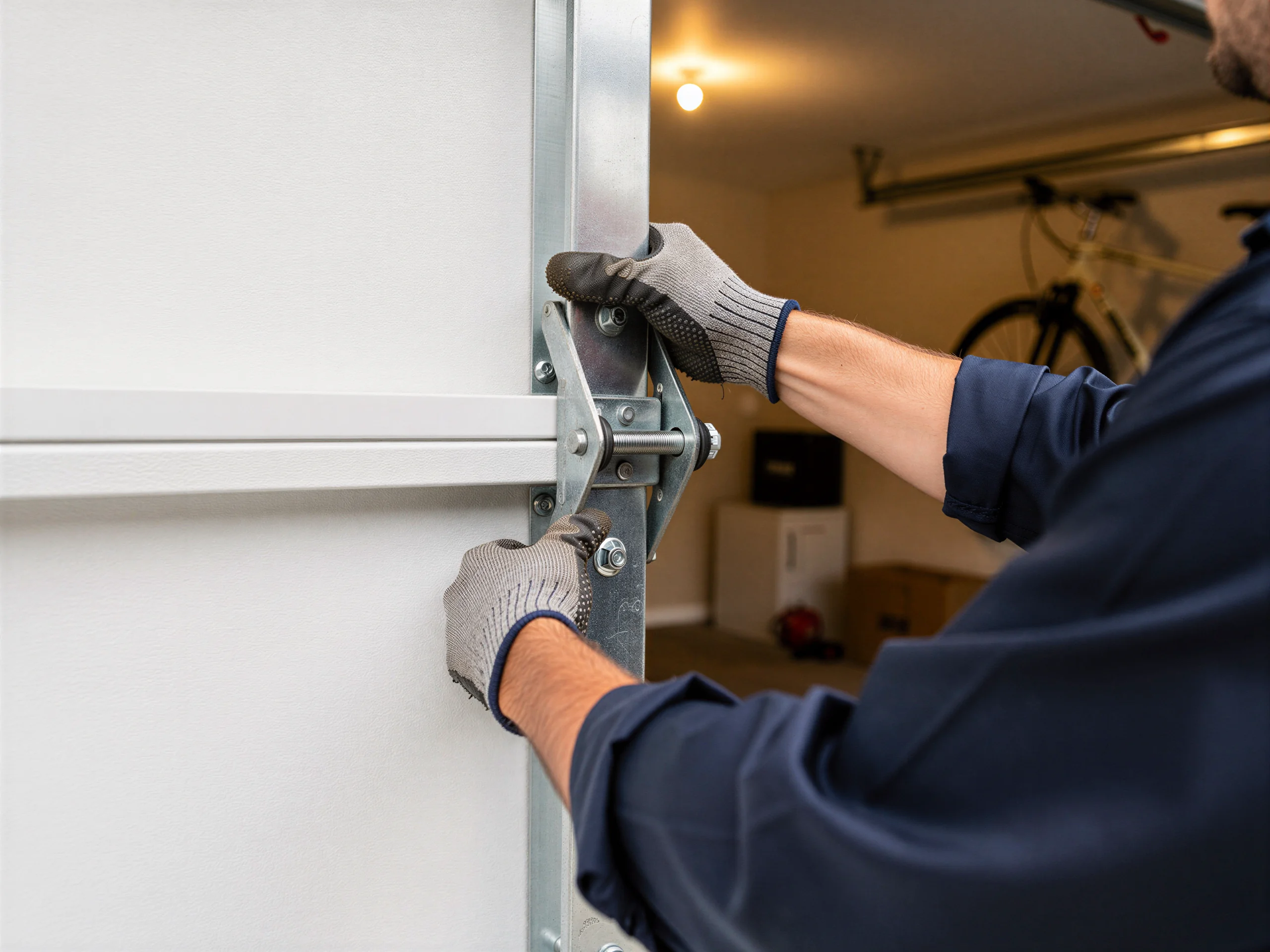
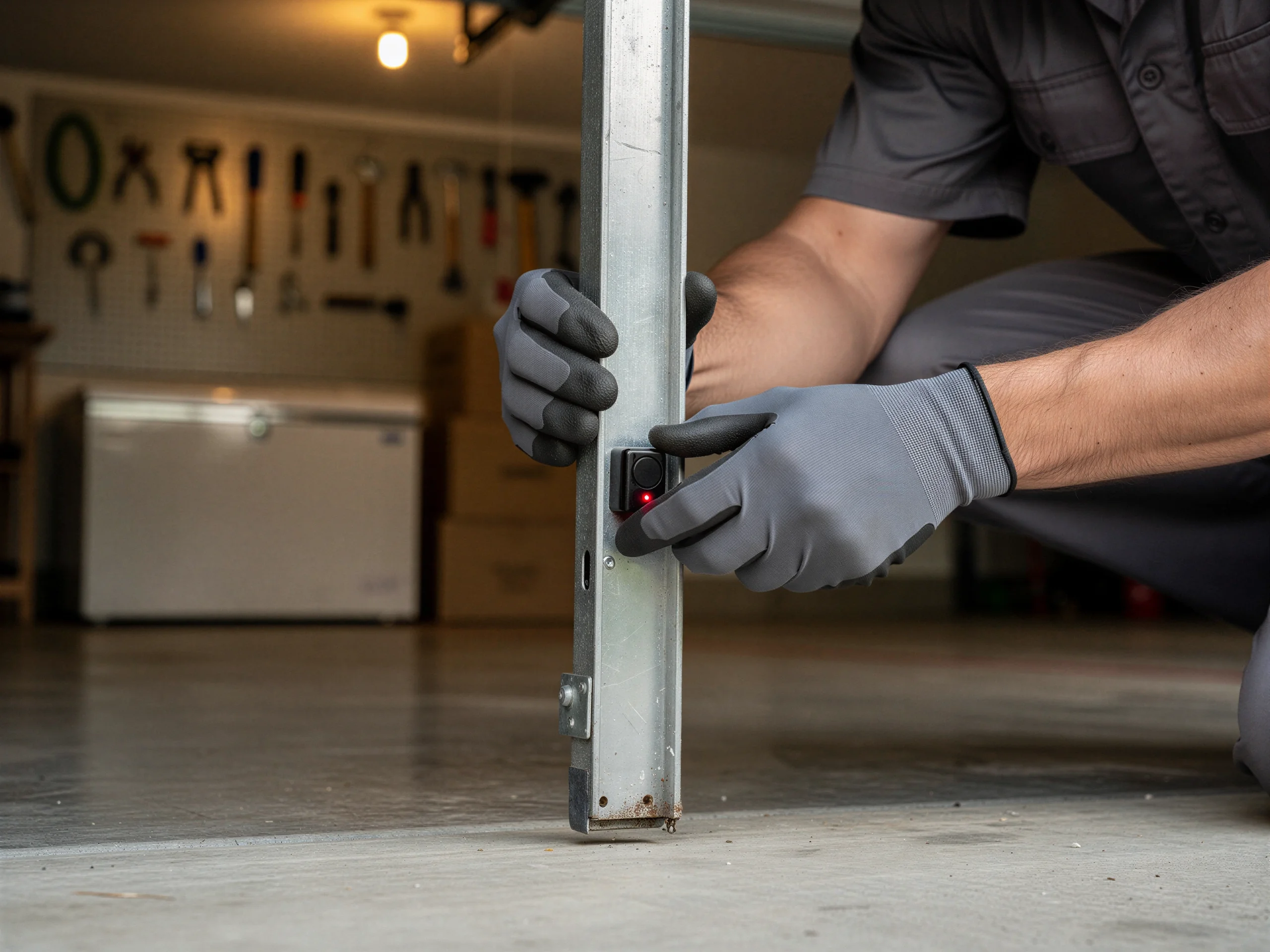
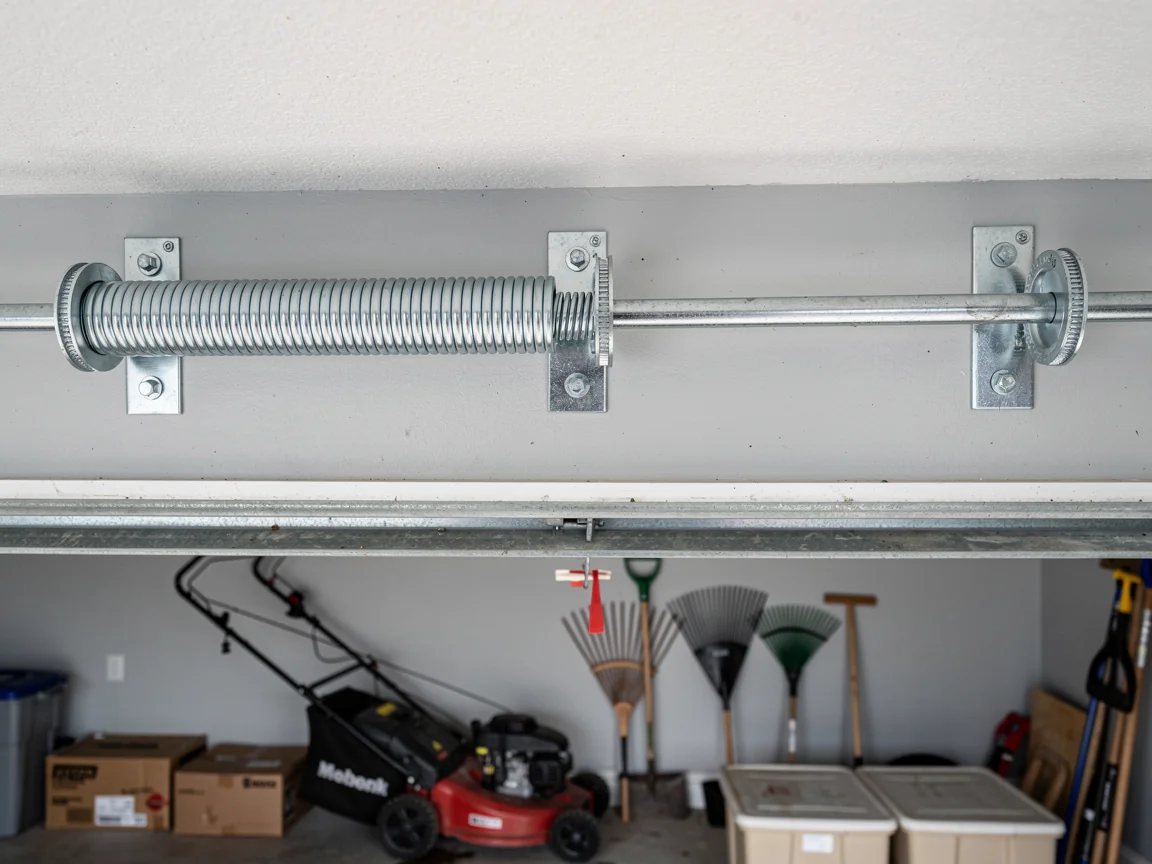
Some of this is fair to tackle yourself. Lubricating rollers and hinges, tightening loose bolts on the track brackets, checking that the photo-eye sensors are aligned - all reasonable weekend jobs. A torsion spring is not. It's under enough tension to do real damage if it lets go while you're working on it, and the tools to wind it safely aren't something most garages have lying around.
The other thing we'll tell you straight: if your opener is original to a 1984-era build, repairing it is often a losing bet. Parts for motors that old are hard to source, and a new opener with modern safety reversal costs less than you'd expect once you add up what a repair visit runs. We'll always tell you which way the math points before you spend money on either option.
Where This Job Goes Sideways
The failure that catches people off guard is when the spring and the opener give out close together.
Companion parts fail together
On houses from the 1984 era, that's common - both were installed around the same time, so they're wearing out on a similar schedule. A homeowner replaces the spring, then two months later the opener motor burns out trying to lift a door whose cable has also started fraying. Cable fraying is the other thing we watch for on doors this age.
Worn drum damages cable
The cable runs through a drum that's often original, and once that drum pits, it saws at the cable instead of running smooth. By the time you hear a cable snap, the door usually drops hard on one side. That's a heavier repair than a straight spring swap, and it's the kind of thing worth catching on inspection rather than waiting for the bang.
What Is on the Truck
We run this call out of Dallas, about 16 miles from Emerson, so the truck is stocked for what the area's housing stock actually needs rather than loaded for a guess. Given how much of the region - not just Emerson - was built in that same 1980s-to-90s window, that means torsion springs in the common residential sizes, replacement drums and cable, and openers that handle the older-style rail systems still bolted into a lot of these garages.
We don't carry every spring size or every opener model on every run - some older or less common units need a part ordered in, and we'll tell you up front if that's the case rather than have you wait on a truck that doesn't have it. For the sizes that match what's common in this part of the county, though, most jobs get finished in one visit.
Talk to a local pro
Garage door service in Dallas?
Same-day service with honest, upfront quotes.