What Is on the Truck
Hiram's housing stock centers on a 2004 median build year, which puts most of these garage doors squarely in the steel sectional era - factory-painted panels, usually 18" or 21" sections, often with a window row up top.
Torsion standard by 2004
By the time these houses went up, torsion spring hardware was already standard, so we're not dealing with the older extension-spring setups you'd find on pre-1980s doors elsewhere in the county.
Insulated panel stock
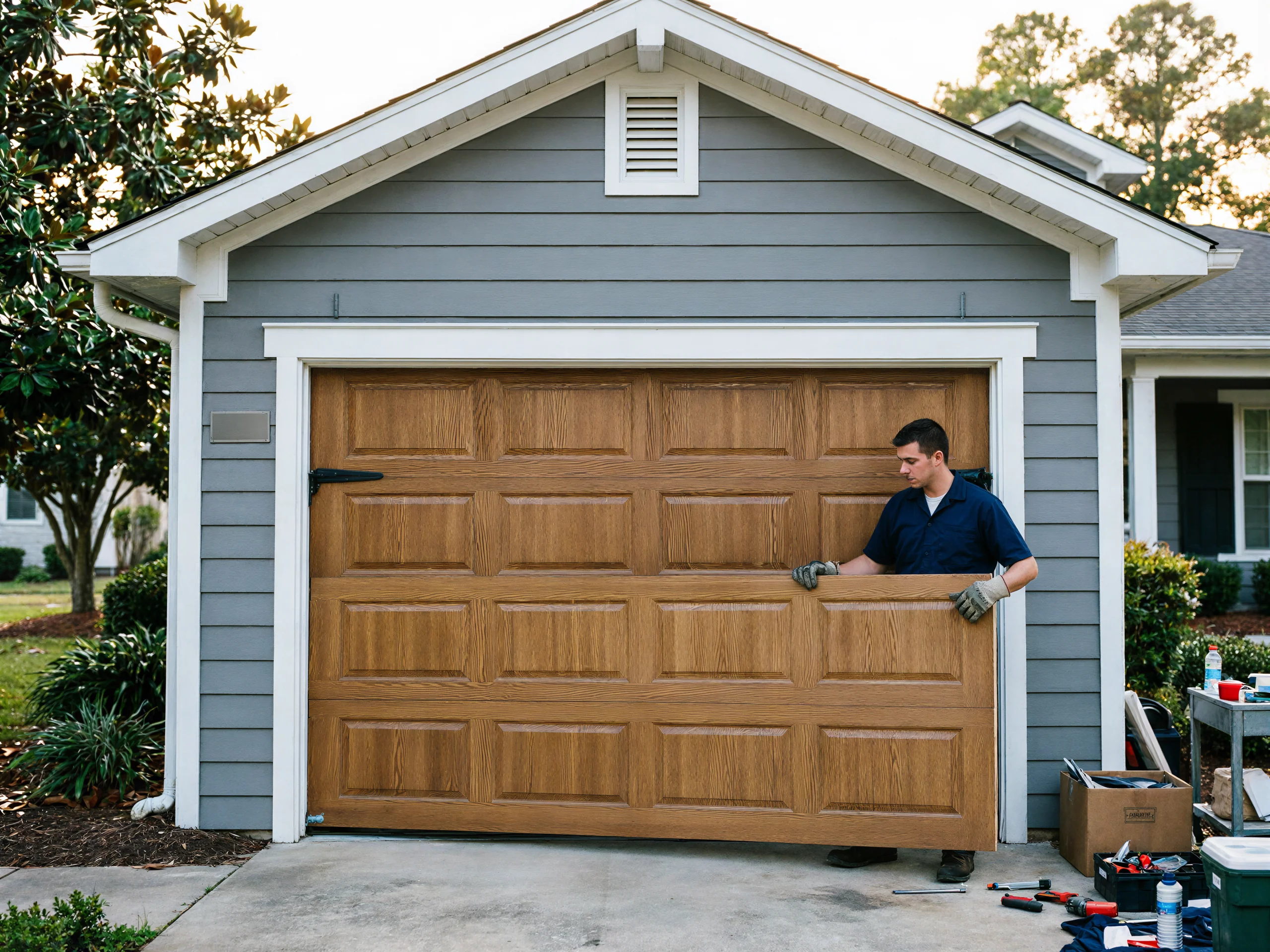
The truck carries insulated steel panel stock in the common R-12 and R-16 values, plus the standard builder colors - white, almond, sandstone - that cover a good share of these houses. What it doesn't carry is every discontinued panel profile.
Special-order builder panels
If your door is a less common builder model, we may need to special-order the exact panel rather than pull one off the shelf, and that changes the timeline. We'll tell you straight if your door is a stock match or a special order before we start cutting anything loose.
Booking a Visit
We run this job out of Dallas, about 6 miles from Hiram, so there's no local branch or drop-in counter here - a visit means we drive out, look at the door, and quote the panel on site. If you're not sure whether the damage is a panel problem or something with the track or opener, the repair page covers the diagnosis side of things; panel replacement is its own job once we know the panel itself is what's bent, cracked, or rusted through. We don't promise a same-day window for Hiram specifically - that depends on the panel being in stock, not on the drive.
Where This Job Goes Sideways
The most common snag isn't the install - it's the match. A lot of Hiram subdivisions went up in tight clusters during the same few years, which means a lot of doors sharing the same builder-grade panel style.
Panels lacking matches
Twenty years on, some of those exact profiles are discontinued, so a single damaged panel on an otherwise good door can mean the whole door gets replaced instead of just the section, simply because nothing on the market matches the five panels still in good shape.
Seam misalignment after impacts
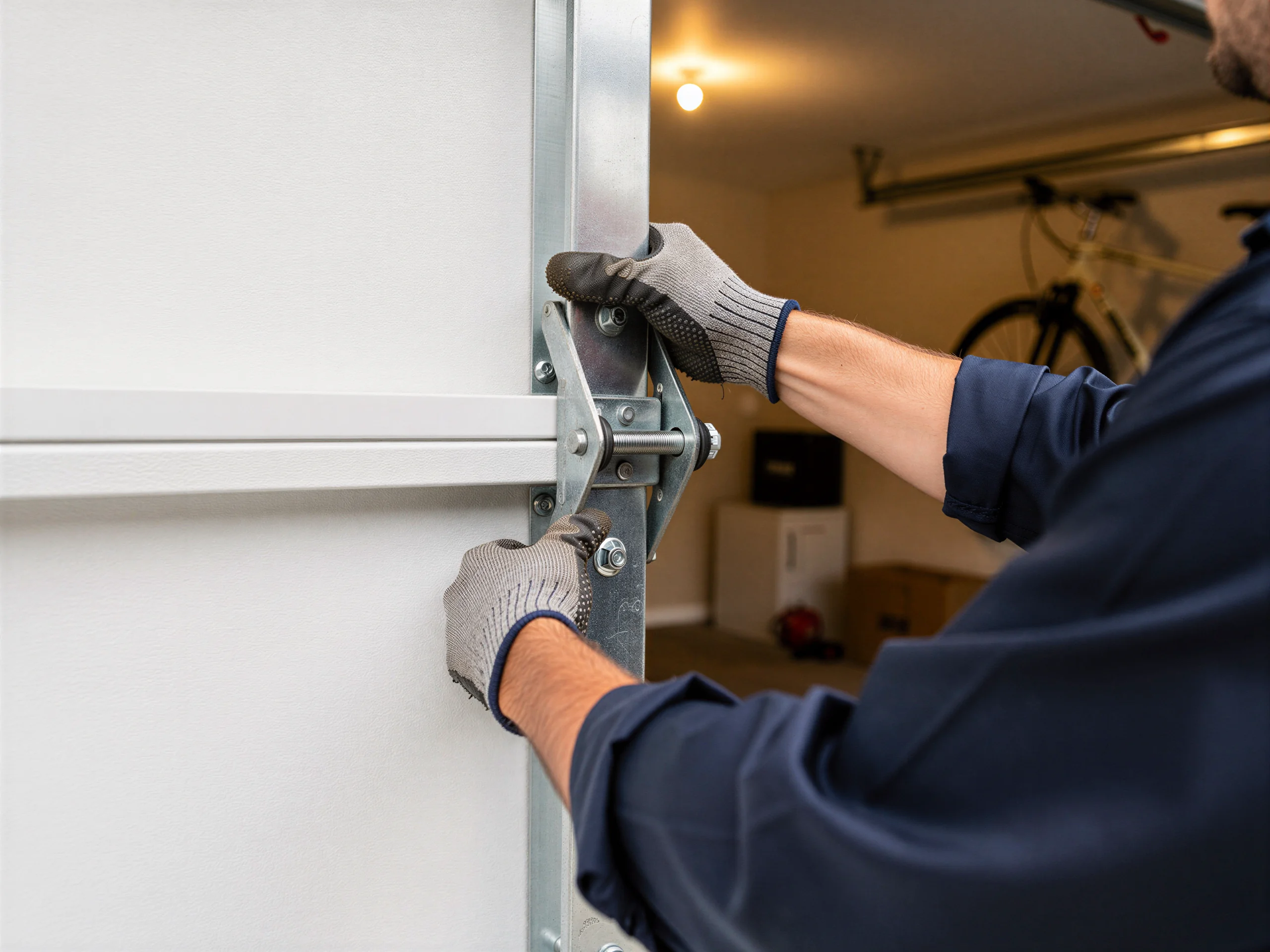
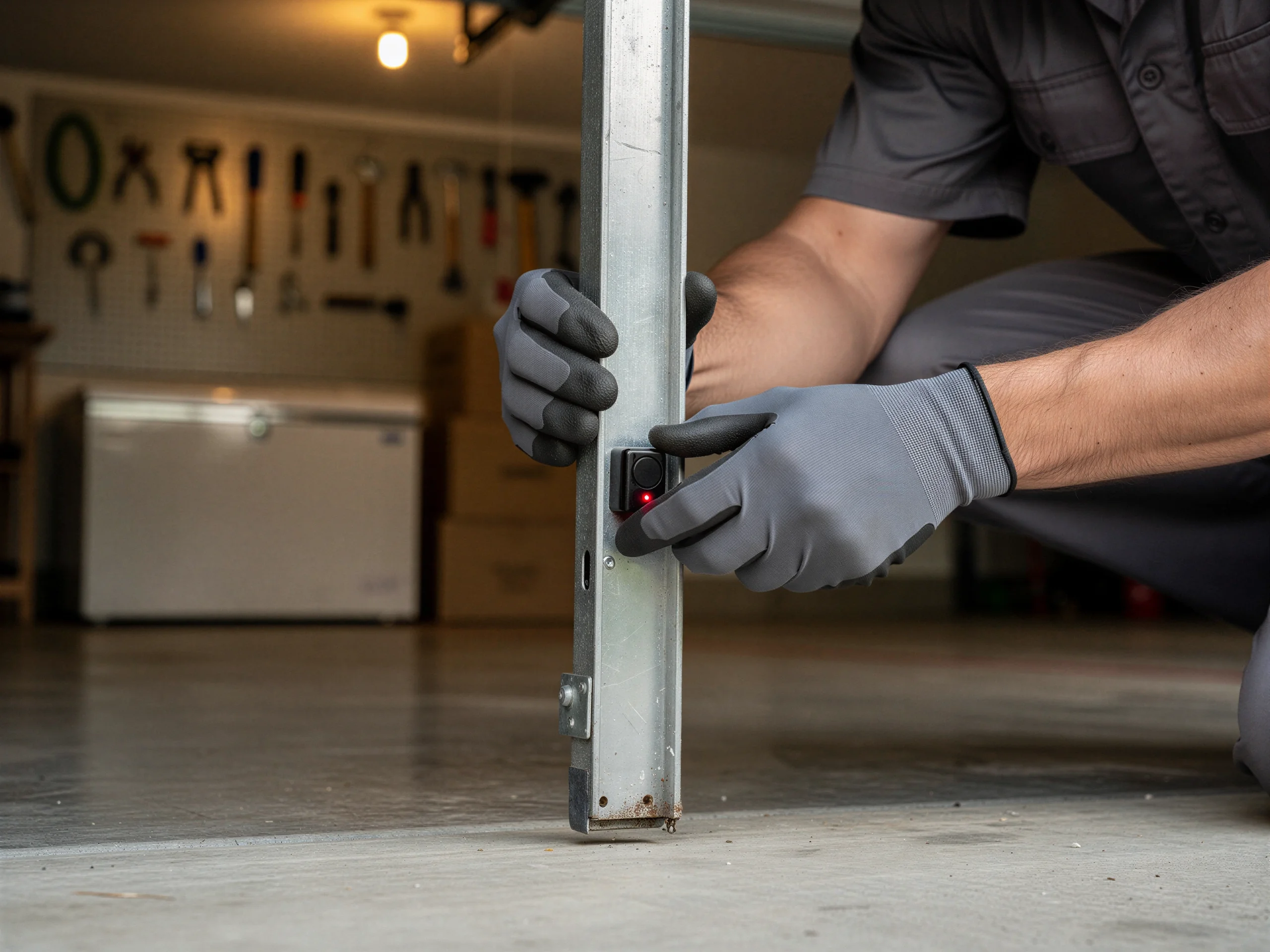
The other place this goes wrong is track alignment - a panel takes a hit, bends at the seam, and the door still closes, just slightly off-track, which then chews up rollers and hinges over the following months if nobody catches it early. We check the track every time, not just the panel.
How Long It Takes
A straight stock-match panel swap on a standard sectional door, with the color and profile still available, is usually a one-visit job once we're on site with the part. A special-order panel for an older or less common builder style adds lead time before we can even schedule the install - we're waiting on the manufacturer, not sitting on the job. We won't quote a specific turnaround here without seeing the door and knowing whether your panel is still in production, because guessing on that just sets you up for a broken promise.
The DIY Question
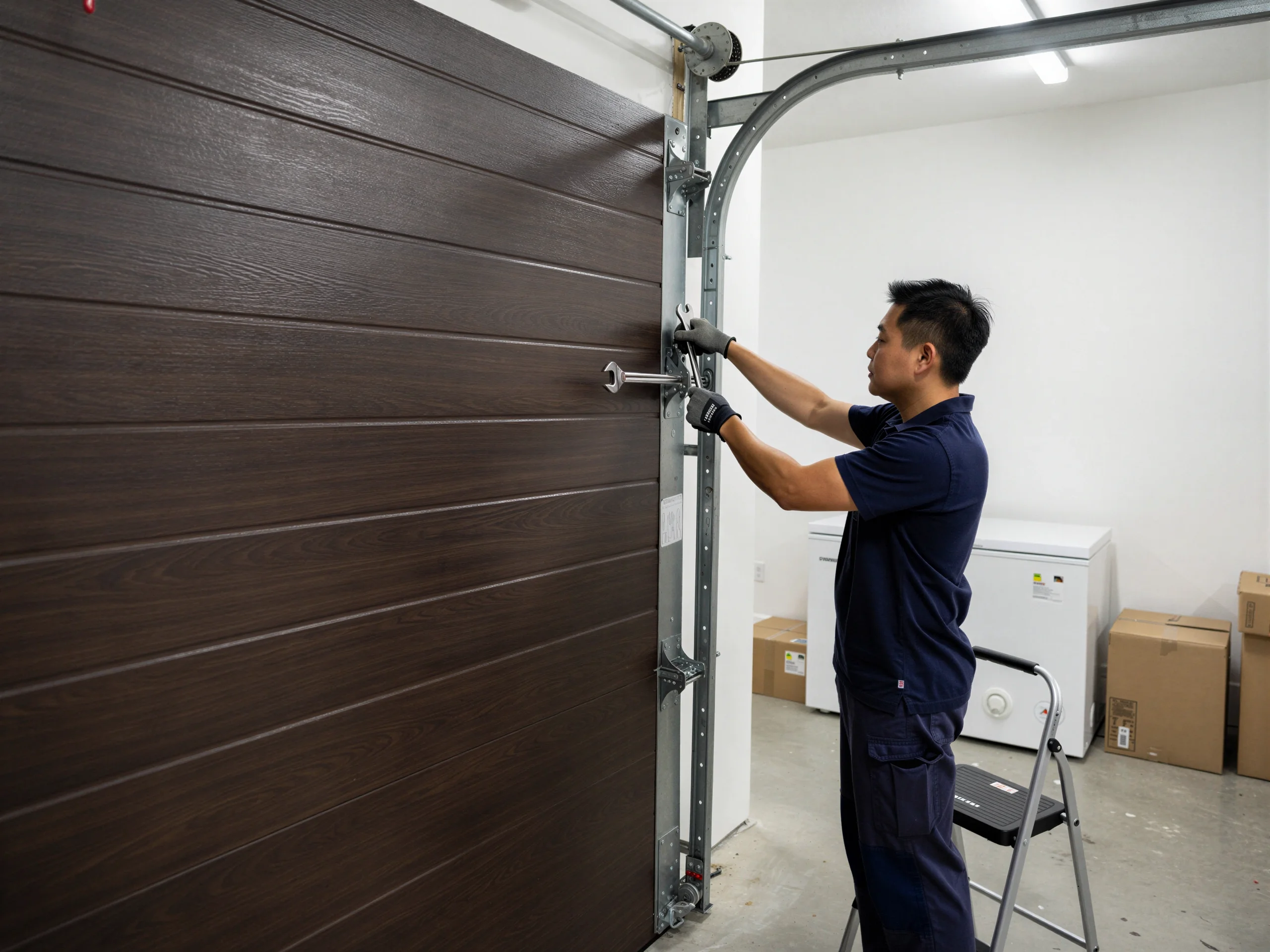
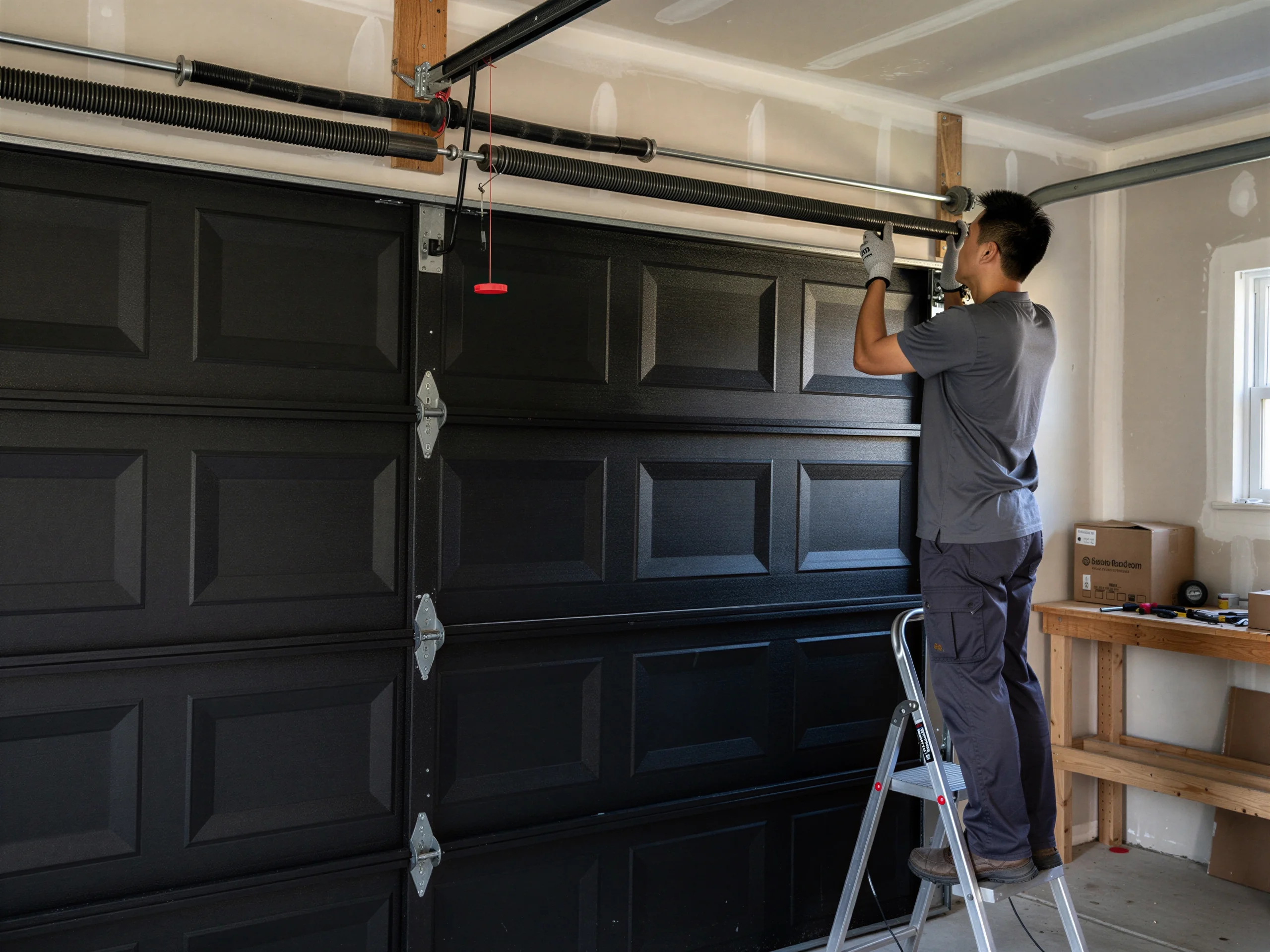
Swapping a single panel sounds like a bolt-off, bolt-on job, and on paper it is - until the door has a torsion spring holding tension across the whole assembly.
Bracket loosening spring hazard
Loosen the wrong bracket on a torsion setup and the spring can let go hard enough to break a hand or worse.
Seam matching is tricky
Beyond the safety issue, matching seam alignment on a 2004-era steel door takes more than eyeballing it; panels that don't sit flush at the seam bind the rollers and strain the opener within weeks. If you're set on doing it yourself, at minimum get the spring released by someone who does this for a living first.
What Causes It Around Here
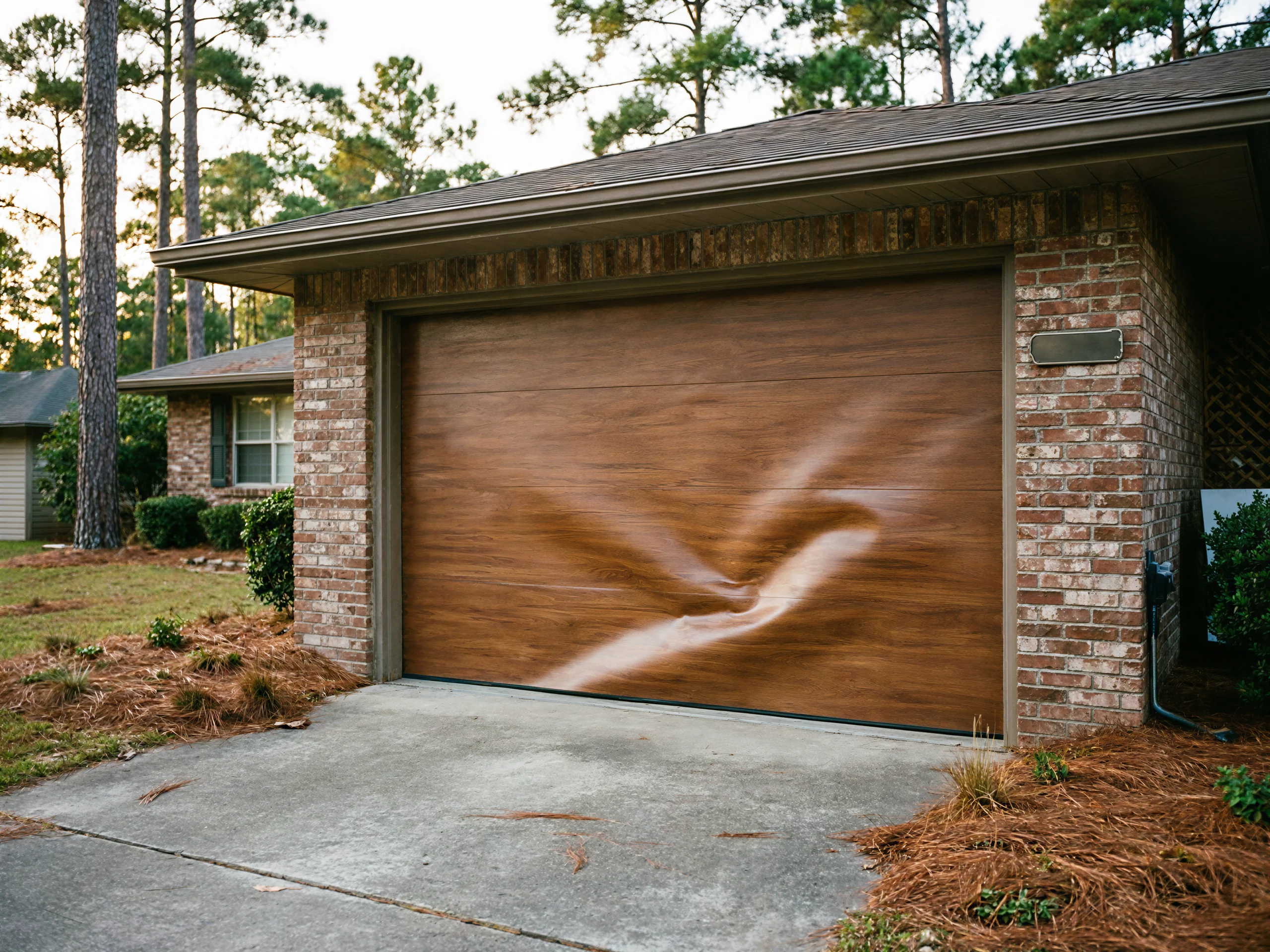
Most of the panel damage we see on these newer Hiram doors comes down to impact - a car bumper, a basketball backboard mount, a trailer hitch backing in too far. That's not a Hiram-specific problem on its own, but the age of the housing stock makes it more visible: a 2004 door that's taken one hard hit now shows a noticeable dent against panels that are otherwise barely worn. The region's cold-moderate climate plays a slower role too - repeated freeze-thaw cycles over twenty years work at the seams between panel sections, and the bottom panel takes the brunt of ground moisture, which is usually the first one to show rust-through even when the rest of the door still looks new.
Talk to a local pro
Garage door service in Dallas?
Same-day service with honest, upfront quotes.